






Highway Network Surge
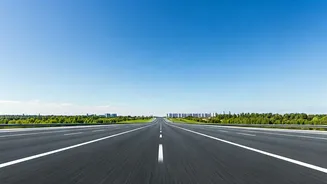
India's road infrastructure has undergone a remarkable expansion over the last decade, with national highways growing substantially. From a length of 91,287
km in early 2014, the network has surged to an impressive 1,46,342 km by mid-2025. This significant increase underscores the government's commitment to enhancing connectivity, facilitating logistics and freight movement, and fostering regional development. While national highways constitute a relatively small portion of India's total road network, they are vital conduits, carrying nearly 40 percent of all road traffic and playing a crucial role in the nation's economic engine. This growth is a testament to strategic planning and investment aimed at bridging distances and boosting economic activity across the country.
Maharashtra's Road Dominance
Maharashtra proudly stands at the forefront, commanding the longest national highway network in India as of 2025. The state has witnessed a near tripling of its highway infrastructure, expanding from a modest 6,249 km in 2014 to a substantial 18,462 km in 2025. This phenomenal growth is attributed to Maharashtra's strategic positioning, housing key industrial hubs, major ports, and critical freight corridors. The continuous expansion of its highway network is indispensable for supporting its robust economic activities and ensuring seamless interstate connectivity, vital for trade and commerce.
Uttar Pradesh's Connectivity
Securing the second position, Uttar Pradesh has significantly bolstered its road infrastructure, growing its national highway network from 7,986 km to 12,123 km. Its central geographical location and substantial population make well-developed road connectivity paramount. Efficient highways are crucial not only for facilitating the movement of a large passenger base but also for ensuring the smooth transit of agricultural produce, thereby supporting the state's vast agricultural supply chains and economic stability.
Rajasthan's Vast Network
Rajasthan, known for its expansive geographical territory, boasts one of the most widespread highway networks in the country. Its national highway length has seen a considerable increase, rising from 7,646 km in 2014 to 10,733 km by 2025. This development is instrumental in supporting its burgeoning tourism sector, facilitating the transport of mineral resources from its mining operations, and strengthening crucial cross-border trade routes with neighboring regions.
Madhya Pradesh's Central Role
Often referred to as India's geographical heart, Madhya Pradesh has dramatically enhanced its highway network, expanding from 5,116 km to 9,263 km. Its pivotal central location makes it a crucial transit point for road traffic moving both north-south and east-west. The upgraded highway system is vital for managing the significant volume of goods and passengers that pass through the state, ensuring efficient movement across the country.
Andhra Pradesh's Growth Spurt
Andhra Pradesh has experienced robust development in its national highway infrastructure, growing from 4,190 km in 2014 to 8,683 km by 2025. Key drivers behind this expansion include the strategic development of port connectivity and the establishment of industrial corridors. These enhancements are crucial for facilitating trade through its ports and supporting the growth of its industrial zones.
Gujarat's Economic Arteries
Gujarat's national highway network has seen substantial growth, increasing from 4,694 km to 8,111 km. This expansion is closely linked to the state's robust industrial base and its prominent role in national and international trade. The efficient functioning of its numerous ports and manufacturing centers is heavily reliant on the high-quality road transport infrastructure that these highways provide.
Karnataka's Enhanced Links
Karnataka ranks among the states with a significant national highway network, reaching 8,191 km, a notable increase from its 6,177 km in 2014. The Ministry of Road Transport and Highways has emphasized that improvements in inter-city connectivity and the establishment of more efficient freight routes have been pivotal factors in this development, supporting both passenger mobility and cargo movement.
Tamil Nadu's Urban Highways
Tamil Nadu's highway system has expanded from 4,975 km to 7,000 km, strengthening vital connections between its numerous industrial cities, key ports, and logistical hubs. Given its densely populated urban areas and significant industrial activity, advanced road infrastructure is particularly critical for maintaining economic momentum and facilitating efficient movement of goods and people.
Bihar's Development Drive
Bihar has witnessed considerable progress in its highway development, with its national highway network growing from 4,467 km to 6,155 km. This improvement in connectivity is instrumental in enhancing access to rural areas and facilitating interstate trade routes, thereby contributing to the economic upliftment of the state and its integration into the national economy.
Odisha's Coastal Reach
Concluding the top 10, Odisha's national highway network has expanded to 5,897 km, up from 4,550 km in 2014. The state's significant mining industry and its coastal proximity have been key drivers for these highway upgrades. Enhanced road infrastructure is essential for the efficient transport of minerals and for leveraging its coastal advantages for trade and development.