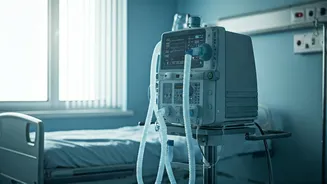








Passive Euthanasia Explained
Passive euthanasia, unlike its active counterpart which involves a physician administering a lethal substance, is centered on the natural course of life
by discontinuing life-sustaining treatments. In India, this means patients or their designated representatives can opt to refuse interventions like artificial ventilation, chemotherapy, or dialysis, allowing the individual to pass away naturally. This contrasts with active euthanasia, which remains illegal in India but is permitted in several Western countries like the US and Canada. The core principle of passive euthanasia is the patient's right to refuse medical care that merely prolongs suffering without a prospect of recovery or a good quality of life, thereby respecting their dignity and autonomy.
The Indian Procedure Framework
Following the Supreme Court's 2023 directives, the Union Health Ministry has laid out draft guidelines for the withdrawal of life support. The initial step involves the treating physician assessing whether the patient has any chance of recovery or maintaining a decent quality of life. Subsequently, a primary medical board, comprising the treating physician and two subject matter experts with at least five years of experience, convenes to evaluate the case and reach a consensus. This board then discusses the prognosis and potential treatment options with the patient's family, aiming for a shared decision on the future course of care. If the consensus is to withdraw treatment, a formal request is submitted to a secondary medical board. This board, constituted by a doctor nominated by the Chief Medical Officer of the district and two additional subject experts, is mandated to make a decision within 48 hours. While magistrates are to be informed before treatment withdrawal, their explicit approval is not a prerequisite.
Persistent Hurdles in Practice
Despite the Supreme Court's efforts to streamline the process in 2023, significant challenges remain in the practical implementation of withdrawing life-supporting care. Dhvani Mehta, co-founder of the Vidhi Centre for Legal Policy, highlights the persistent difficulty in finding hospitals with doctors possessing adequate expertise and experience for such complex decisions. Furthermore, the procedural requirement for the Chief Medical Officer (CMO) to nominate doctors for the secondary medical board is not uniformly followed across all states; only a few, like Maharashtra, Goa, and Karnataka, have begun creating these nominated doctor lists. Dr. Sushma Bhatnagar, former head of palliative care at AIIMS, notes that while government hospitals are often more amenable to counseling families for withdrawal after thorough discussion, many private hospitals are apprehensive due to potential litigation. This fear can create a barrier, even when clear communication could alleviate family guilt and support a decision aligned with the patient's best interests.
Living Wills: Empowering Choices
Living wills, also known as advance directives, represent a crucial tool in empowering patients to dictate their end-of-life care preferences. These legal documents enable individuals to specify the medical treatments they would or would not want if they lose the capacity to make decisions in the future. They can encompass a range of stipulations, including the desired type of medical care, preferred gender pronouns, and the nomination of a proxy decision-maker, who may or may not be a family member. By clearly articulating their wishes beforehand, patients can ensure their autonomy is respected and alleviate the immense burden of decision-making on their families during a critical time. This proactive approach offers a pathway to more dignified and personalized end-of-life care, aligning medical interventions with the patient's deeply held values.