




The Lunar Laboratory
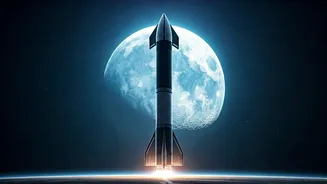
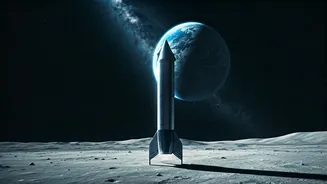
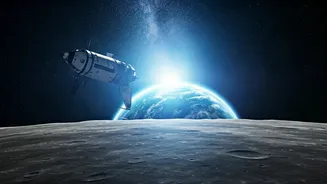
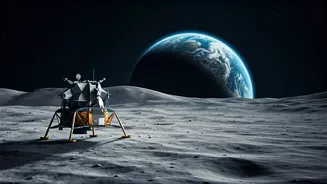
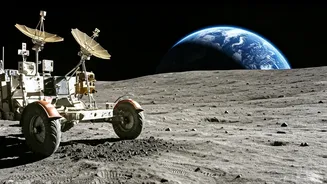
NASA's decision to use the Moon as a laboratory reflects a strategic approach to understand Earth's water. The Moon, devoid of an atmosphere and relatively
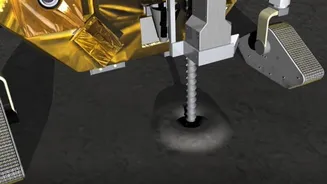
stable, acts as a perfect canvas for collecting pristine data. Scientists intend to study the lunar surface, examining samples of soil and rocks. This includes looking at isotopes, which serve as time capsules and tell tales about the origins of matter. Analyzing these could give them a very precise understanding of where the water came from, whether it arrived via space ice or originated from within the Earth itself. The Moon's setting also offers an opportunity to study how solar winds interact with surface materials, offering information about how these interactions might deliver or influence the presence of water.
Decoding Water's Origins
The principal goal of these lunar expeditions is to unlock the secrets behind Earth's water. The prevailing scientific hypotheses involve either water being delivered to the Earth by asteroids and comets, or it existing within the planet's interior. Researchers will conduct detailed analyses of lunar samples, searching for specific signatures. These will give clues about the sources and the path of the water on Earth. This could involve looking at the ratio of different isotopes of hydrogen, particularly deuterium and hydrogen. Each origin source has its distinct isotopic signature. By studying the lunar soil, scientists aim to discover whether these signatures correspond with those of water found on Earth. This will involve the deployment of highly advanced equipment and the analysis of materials to decipher the chemical composition and water's history on Earth.
Lunar Surface Clues
The lack of atmosphere on the Moon makes its surface a priceless data store. It's constantly exposed to solar winds. These solar winds are streams of charged particles constantly emanating from the Sun. When these particles come into contact with the lunar surface, they can form water molecules, creating a unique record that scientists can study. Analyzing the lunar regolith (the loose, dusty material covering the Moon's surface) allows scientists to quantify the amount of water produced by this interaction. Furthermore, analyzing the composition of the regolith helps trace the history of interactions between the Moon, the solar wind, and any water-bearing asteroids. By measuring the concentration and makeup of these substances, they intend to construct a precise picture of water's presence throughout the solar system, providing invaluable data for models regarding its origin and distribution.
Future Missions & Impact
The investigations into lunar water contribute to wider scientific quests, and also offer potential for future space exploration. The data gathered from these missions is valuable not only for scientists studying planetary science but for future manned missions. By understanding the processes that create and maintain water, researchers can better address questions about how life began on Earth and whether similar conditions might exist on other planets. This knowledge has the potential to guide future space colonization efforts, including resource utilization. The Moon could potentially serve as a base for future interplanetary travel, offering resources such as water ice. Through this combined scientific approach, NASA’s lunar missions seek to reveal not only the Earth's history but also the possible futures of humanity in space, contributing to our understanding of the universe and our place within it.