





Orbital Compute Frontier
The landscape of computing is rapidly expanding into space, with India poised to witness its inaugural large language model (LLM) trained in orbit as early
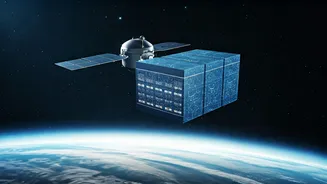
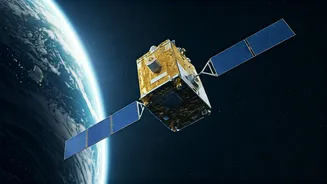
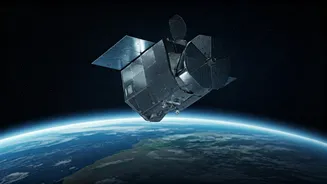
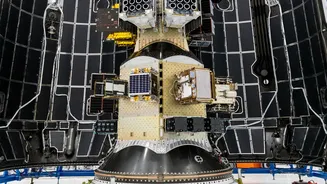
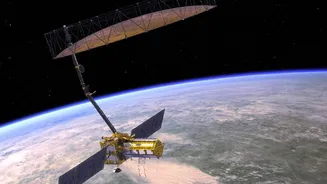
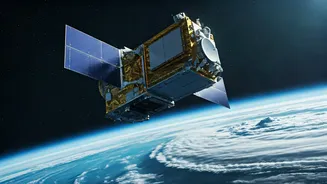
as this year. This significant development stems from a recent partnership announced between space-tech startup Pixxel and LLM provider Sarvam AI. Together, they are collaborating on the creation of 'The Pathfinder,' set to be India's pioneering orbital data centre satellite. Projected for launch by the end of 2026, this 200-kilogram satellite will be equipped with powerful Graphics Processing Units (GPUs). These units will be instrumental in conducting the training and inference processes for Sarvam's advanced AI models. Notably, unlike traditional satellite computing, which often uses low-power processors optimized for resilience rather than raw performance, the Pathfinder is designed to host hardware comparable to that found in on-ground data centres, which are currently the backbone for developing cutting-edge AI models. This initiative aligns with a global trend where major tech companies, including Google and SpaceX, alongside numerous startups, are increasingly exploring space as a solution to overcome the substantial energy limitations faced by terrestrial data centres.
Addressing Earth's Limits
The demand for data centre capacity is escalating dramatically worldwide. Projections suggest global data centre capacity could reach an astounding 200 GW by 2030, according to real estate experts JLL. In India specifically, a report from Morgan Stanley estimates an explosive growth, with capacity set to surge six-fold from 1.8 GW to approximately 10.5 GW by 2031. However, this massive energy appetite of terrestrial data centres is not without its challenges, leading to public concern and prompting the tech industry to seek innovative solutions beyond Earth's confines. Orbital data centres represent one such 'out-of-the-box' approach. Companies like Elon Musk's SpaceX have ambitious plans to deploy up to a million data-centre satellites into orbit. Furthermore, Meta has recently forged alliances with energy startups, exploring the use of solar energy beamed directly from space to power its on-ground data centres. Even national space agencies, such as the Indian Space Research Organisation (ISRO), are actively investigating next-generation satellites equipped with integrated data processing and storage capabilities, as indicated by recent governmental disclosures in Parliament.
Pixxel-Sarvam Synergy
The collaboration between Pixxel and Sarvam AI outlines a clear division of responsibilities for the 'Pathfinder' mission. Pixxel will take the lead in the entire lifecycle of the satellite, encompassing its design, construction, launch, and ongoing operation. The satellite development will take place at Gigapixxel, Pixxel's burgeoning facility designed for scalable satellite production, capable of producing up to 100 units. While specific technical specifications for Pathfinder remain undisclosed by Pixxel, Sarvam AI will focus on executing the training and inference of its language models directly in the space environment. This means that the AI models and their processing platform will function without any reliance on external cloud or ground infrastructure, ensuring a sovereign operational capability. This mission is set to rigorously test real-time AI inference and data processing within the challenging conditions of space, evaluating performance metrics, power management strategies, thermal limitations, and the efficacy of real-time data workflows. Ultimately, it aims to establish the technical feasibility and commercial viability for future orbital data centre systems.
Sovereign AI in Space
The vision for orbital data centres extends beyond just addressing Earth's energy constraints; it opens up a novel frontier for computation. Pixxel CEO Awais Ahmed emphasizes this potential, highlighting how compute power can be harnessed from abundant solar energy in space, operate closer to data sources originating from space, and overcome limitations inherent to Earth-bound operations. He states that Pixxel aims to actively shape this shift in space infrastructure rather than merely observing it. Sarvam CEO Pratyush Kumar echoes this sentiment, underscoring Sarvam's dedication to building India's comprehensive AI platform from the ground up. Partnering with Pixxel allows them to extend this 'sovereign stack' into orbit, enabling India-built AI models to run on an India-built satellite. This capability is deemed crucial for the nation to maintain control over its own intelligence infrastructure. Beyond its AI training capabilities, the Pathfinder satellite will also carry a hyperspectral imaging camera. This instrument will capture high-fidelity hyperspectral data, which will then be analyzed directly in orbit using the foundation models trained in space. This integrated approach bypasses the need to transmit vast amounts of raw imagery back to Earth for processing, enabling real-time pattern identification, change detection, and insight generation for faster decision-making.