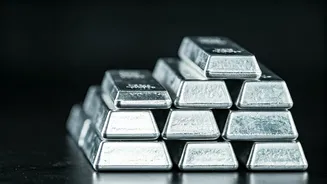







Silver's Price Ascends
The international market observed a notable event: silver's price crossed the $100 threshold. This upward trajectory in silver's valuation has sparked
interest and curiosity among economic observers. Several elements have coalesced to fuel this surge, creating a complex interplay of market dynamics. This rise isn't isolated; it reflects broader global economic trends and shifts in investment patterns. As a precious metal, silver often benefits from a combination of factors, including safe-haven demand, industrial applications, and speculation. Analyzing these driving forces is essential to grasp the reasons behind this significant price movement and its potential implications for the financial world.
Economic Drivers Examined
Several fundamental economic elements are at the core of silver's escalating value. Firstly, the ongoing concerns about inflation globally play a significant role. Investors often turn to precious metals like silver as a hedge against the diminishing purchasing power of fiat currencies. Furthermore, there's a heightened demand from industrial sectors, where silver is a critical component in various technological applications. The supply side, including factors like mining output and availability, also impacts pricing. Any reduction in supply relative to demand will naturally push the price upward. Lastly, macroeconomic events, such as changes in interest rates, geopolitical tensions, and fluctuations in the US dollar, have a substantial influence on the silver market. These elements, working in combination, construct the scenario behind silver's recent price increase.
Factors Affecting Demand
Analyzing the demand side of the equation unveils additional aspects affecting silver prices. Investment demand is a primary driver. As economic uncertainties or instability grow, investors frequently choose silver as a secure asset. This safe-haven demand accelerates when traditional markets seem unpredictable. Secondly, industrial demand plays a vital role. The electronics, solar, and automotive industries depend on silver, and growth in these sectors fuels consumption. The expansion of these industries across the globe correspondingly increases demand for silver. Additionally, changes in consumer behavior and tastes can affect demand. For instance, the use of silver in jewelry or other consumer goods indirectly influences price. Considering these elements, the rise in silver price demonstrates a mixture of investment strategies, industrial needs, and consumer preferences.
Supply-Side Considerations
The supply side is an essential factor shaping the silver market. The production of silver is subject to fluctuations in mining activity across the world. A decline in output, whether due to geological constraints, labor disputes, or geopolitical issues, will reduce the amount of silver available, thereby boosting its value. Similarly, the availability of recycled silver, sourced from electronics and jewelry, affects the balance between supply and demand. Government policies and environmental regulations in mining countries also have a substantial effect on production costs, influencing the eventual price. Any changes in these regulations could affect the supply volume and the silver price, and this could affect the market dynamics. Therefore, to fully understand silver's price trends, one must monitor both the supply dynamics and the factors impacting them.
Impact and Future Outlook
The impact of silver's price increase goes beyond the financial markets, influencing various sectors. For investors, the rise offers opportunities for profit but also calls for careful risk management, as the market is often volatile. Industrial users face escalating costs. This could affect the profitability of businesses using silver in their products. Consumers are also indirectly affected through higher prices for goods that utilize silver components. Looking ahead, the future direction of silver prices will be defined by an interplay of global economic conditions, geopolitical events, and technological advancements. Market analysts continue to examine these factors to make predictions, but the price's volatility requires close attention and adaptive investment strategies, especially given the multitude of variables affecting the market.