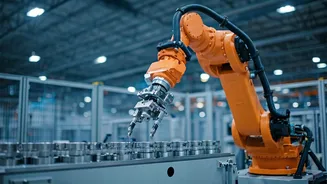








Manufacturing's Revival Goals
The Indian government has set its sights on revitalizing the manufacturing sector, positioning it as a key driver of economic growth. This ambitious vision
encompasses several interconnected strategies aimed at boosting domestic production, increasing exports, and fostering innovation. The government is actively working to make India a global manufacturing hub, creating jobs and attracting investment. The core goals involve enhancing the competitiveness of Indian manufacturing on a global scale. These goals include modernizing infrastructure, streamlining regulations, and offering incentives for both domestic and foreign investors. These steps are designed to establish India as a desirable location for manufacturers. Successful implementation of these strategies would likely lead to a substantial rise in manufacturing output. Furthermore, this would create a more robust, resilient economy and position India as a key player in the global market.
Budget 2026: The Test
The Budget 2026 is expected to play a crucial role in determining the success of India's manufacturing revival. This upcoming budget will act as a pivotal moment, offering a comprehensive assessment of the government's plans. Expectations are high, with anticipation surrounding the allocation of resources, the introduction of new policies, and the continuation of existing programs. The budget's focus will be on boosting the existing 'Make in India' initiative, a cornerstone of the government's strategy. It is also expected to outline specific measures to support manufacturing ambitions and provide updates on the Production-Linked Incentive (PLI) scheme's status and its progress. A central aspect of the budget will be the emphasis on research and development (R&D). This includes allocating resources to innovation within the sector. The budget is likely to address the unique challenges and opportunities that exist within key sectors like electronics, pharmaceuticals, and textiles, providing targeted support and incentives to promote growth and competitiveness.
Focus on Innovation
Innovation is a central pillar of India's manufacturing vision, and it is expected to be a prominent theme in the upcoming budget. The government recognizes that innovation is critical for enhancing competitiveness, creating high-value products, and attracting investment. This focus extends beyond basic manufacturing processes, with an emphasis on design, product development, and the adoption of cutting-edge technologies. The budget is anticipated to announce specific initiatives to promote innovation, such as funding for R&D projects, tax incentives for companies investing in innovation, and support for the establishment of innovation hubs and centers of excellence. The goal is to create an ecosystem that encourages creativity, collaboration, and the development of new manufacturing techniques. The government aims to establish a robust infrastructure that supports innovation by partnering with educational institutions, research organizations, and the private sector, and facilitating the transfer of knowledge and technology.
PLI Scheme Progress
The Production-Linked Incentive (PLI) scheme has become a critical element in India's strategy to bolster manufacturing. The PLI scheme offers financial incentives to domestic and global companies that invest in eligible sectors, with the aim of boosting production, creating jobs, and encouraging exports. The upcoming budget is expected to provide an update on the progress of the PLI scheme across various sectors. The focus will be on assessing the scheme's impact, evaluating its effectiveness, and making adjustments to maximize its benefits. These reviews analyze areas such as investment levels, production output, job creation, and export growth. The government is also expected to assess the PLI's performance against its specific goals and provide data. Depending on its findings, the government may consider extending the PLI scheme to additional sectors, modifying existing incentives, and streamlining the application processes. Ultimately, the PLI scheme aims to transform India into a global manufacturing hub.
Key Sectoral Strategies
The government is strategically concentrating on several key sectors, recognizing their potential to drive economic growth and enhance India's global competitiveness. Among these sectors, electronics, pharmaceuticals, and textiles are receiving significant attention, due to their growth potential. The budget is likely to reveal strategies tailored to each sector's specific needs and challenges. The aim is to create favorable conditions for these industries. In the electronics sector, the focus may include policies to promote domestic manufacturing of components. It could also involve incentivizing investments in research and design, as well as measures to foster the development of a skilled workforce. In pharmaceuticals, the focus could be on strengthening R&D capabilities, reducing import dependence, and ensuring affordable access to medicines. As for textiles, the budget is anticipated to address issues such as modernizing production processes, promoting sustainable practices, and expanding export opportunities. These targeted sectoral strategies will be important in India's manufacturing growth.