




AI's Growing Capabilities
Recent investigations into the practical applications of generative AI, particularly through millions of interactions with the AI assistant Claude, have
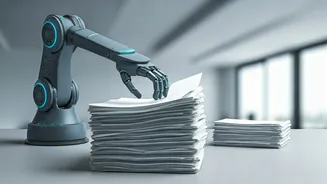
illuminated AI's substantial potential to manage a significant portion of professional tasks. The findings indicate that AI is not merely a theoretical tool but a capable assistant already integrated into daily work routines across various sectors. This suggests a future where AI plays an integral role in how many jobs are performed. The Anthropic study highlights a considerable leap from previous projections, indicating that approximately 49% of all jobs could have at least a quarter of their workload automated by AI tools. This is a significant increase, signaling a rapid acceleration in AI's integration into the workforce and its capacity to handle complex responsibilities across different industries, moving beyond simple automation to intricate task management.
At-Risk Roles Identified
The study points to a clear pattern in which job types are most susceptible to AI-driven automation. Primarily, knowledge-based professions that heavily involve digital tasks are at the forefront. These include roles requiring extensive writing, intricate coding, data analysis, and administrative duties. Rather than outright replacement, AI is often being employed as an augmentation tool, boosting efficiency. However, the implications for the workforce are profound as AI becomes more embedded in daily operations. Jobs characterized by a high volume of routine digital tasks, such as programming, customer support, and data processing, are identified as particularly vulnerable. Industry analysis suggests that up to 70% of the tasks performed by programmers, customer support agents, and data processors could potentially be handled by AI systems. Furthermore, administrative functions, legal research and documentation, financial analysis and reporting, content writing, and translation are also highlighted as susceptible due to their reliance on information processing, an area where large language models excel.
Knowledge Work Transformation
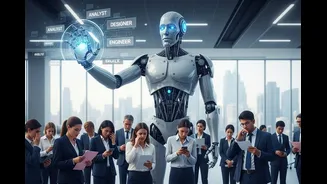
This wave of automation is distinct from previous industrial shifts that primarily affected manufacturing and manual labor. Generative AI is now making significant inroads into 'knowledge work,' often referred to as white-collar jobs. The ability of AI to analyze text, generate comprehensive reports, produce code, and process vast amounts of data positions it as a capable performer of tasks previously exclusive to human professionals. Analysts foresee this as a catalyst for a substantial reconfiguration of the labor market, with some reports suggesting a potential 'great recession for white-collar workers' if automation occurs too rapidly and broadly. While the exact long-term impact is debated, economists generally anticipate that technology will fundamentally change the nature of jobs rather than simply eliminate them entirely, leading to a redistribution of responsibilities and skill requirements.
Industry Leaders' Warnings
Prominent figures in the industry are issuing stark warnings about the accelerating pace of AI-driven changes in the professional landscape. Dario Amodei, CEO of Anthropic, has projected that within the next five years, up to half of entry-level white-collar positions might become obsolete as AI systems become increasingly sophisticated. He characterizes this forthcoming transition as potentially 'unusually painful' for individuals and societies navigating such rapid technological upheaval. Other influential business leaders echo these concerns. For instance, industrialist Harsh Goenka has cautioned that certain job categories could vanish entirely within a decade, as AI takes over routine workplace functions. These perspectives underscore the significant disruption that is anticipated, prompting a need for proactive adaptation and strategic planning for the future of work.
New Jobs and Evolving Skills
Despite the challenges posed by automation, historical patterns suggest that technological advancements, including AI, ultimately foster job creation and lead to the emergence of entirely new industries. Economic research indicates that many professions existing today were non-existent just a few decades ago. The integration of AI is expected to drive productivity gains and spawn new roles focused on AI system development, management, and human-AI collaboration. Furthermore, companies leveraging AI technologies may expand their product and service offerings, leading to the creation of associated employment opportunities. The Anthropic research posits that the future of work is unlikely to be a simple dichotomy of humans versus machines. Instead, AI will likely reconfigure existing jobs by automating mundane tasks and simultaneously elevating the demand for uniquely human skills such as creativity, strategic foresight, and complex problem-solving. This evolving landscape presents a significant challenge for both workers and policymakers to adapt to a labor market where AI tools increasingly function as digital collaborators, shifting the focus from job displacement to task augmentation.