





Ground-Level Campaigning Style
V. Senthil Balaji has adopted a distinctive and immersive approach to campaigning in his constituency, Coimbatore South. Eschewing the typical use of vehicles,
he dedicates substantial portions of his day, five hours in the morning and five in the evening, to walking through streets and engaging with residents on a personal level. This method emphasizes direct interaction, allowing him to listen to constituents, accept offerings, and understand their needs firsthand. Balaji believes this close proximity fosters genuine dialogue, enabling him to connect with people more effectively than he could from a distance. This deliberate pace and personal touch reflect a strategic choice to build rapport and trust through consistent, on-the-ground presence, a stark contrast to the usual high-speed political rallies.
Resilience Post-Incarceration
Balaji’s return to public life follows a significant period of 471 days of incarceration, a time he describes with remarkable equanimity. He states he adapted to his confinement, viewing it as a period of adjustment rather than a setback. During this time, he focused on reading Tamil literature and exercising within the limited space available. Notably, he minimized visits, even from family, except for legal necessities, choosing to remain insulated from external affairs. He did not watch television or follow the media frenzy, demonstrating a strong mental discipline. Upon his release, he transitioned back to his political duties with swiftness, a testament to his resilience and ability to compartmentalize, even referring to himself as having been a 'most prized target' during this phase.
Strategic Importance in Western TN
In the complex political arena of Tamil Nadu, V. Senthil Balaji is a figure of considerable influence and strategic depth. Beyond his previous roles as minister and five-term MLA, he is now recognized as the DMK's key strategist for western Tamil Nadu, often referred to as the Kongu region. His mandate extends beyond his own candidature in Coimbatore South, a constituency historically aligned with the AIADMK-BJP. He has been entrusted with the leadership of the DMK's campaign across 35 seats in this region, a task that signifies the party's high regard for his capabilities. A senior DMK leader highlighted his selection as bringing a 'most reliable match-winner' to a district where the party has previously struggled, underscoring his pivotal role in challenging the established opposition dominance.
Challenging the 'Fortress' Myth
Balaji is actively working to dismantle the perception of western Tamil Nadu as an insurmountable 'AIADMK-BJP fort.' He meticulously analyzes past election results, noting that in many Coimbatore district seats, the DMK's losses in 2021 were by narrow margins, some within 10,000 votes. He identifies Thondamuthur as the only constituency with a significant margin exceeding 40,000 votes. This detailed understanding fuels his confidence that when the DMK campaigns effectively, the opposition's strength wanes. Balaji views politics as an exercise in precise arithmetic, where small electoral deficits can be overcome through persistent engagement and strategic intervention. His approach is to neutralize the perceived invincibility of the opposition by demonstrating the DMK's capacity to gain ground through targeted efforts.
From AIADMK to DMK
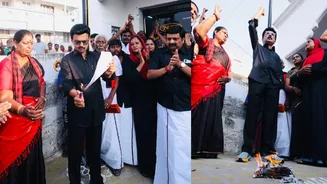
V. Senthil Balaji’s political trajectory has been marked by significant shifts. Originally a prominent figure within the AIADMK under J. Jayalalithaa, he served as a visible minister, known for his organizational skills and ability to mobilize support for government schemes like 'Amma Water.' His early political persona involved fervent displays of loyalty, including ritualistic acts. However, his career within the AIADMK saw changes, leading to his exclusion from the Cabinet in 2015. Following Jayalalithaa’s death, he aligned with the Sasikala-TTV Dhinakaran faction before making a pivotal switch to the DMK in 2018. This defection proved instrumental in bolstering the DMK's presence and prospects in the western regions, areas where the party had previously faced limitations, transforming him into a key asset for the DMK's expansion.
Navigating Allegations and Trust
Balaji confronts persistent accusations of corruption and faces numerous investigations, stemming from his arrest by the ED in an alleged cash-for-jobs scam. While critics label these as evidence of malpractice, his supporters maintain that these are instances of 'political targeting.' Balaji himself offers a pragmatic perspective, asserting that the electorate is primarily concerned with tangible benefits and problem-solving rather than political controversies. He believes people will ultimately support those who can deliver positive outcomes and address their concerns effectively. His strategy involves focusing on the impact of Chief Minister M.K. Stalin's welfare initiatives, such as the Rs 1,000 monthly allowance for women, free bus travel, and school meal programs, aiming to translate public trust in these schemes into electoral victories.
Unified Campaign Approach
Addressing the complexities of campaigning in diverse areas, Balaji emphasizes a unified approach, viewing the entire region as a cohesive field of relationships rather than a collection of distinct social strata. When asked about the differences between Karur and Coimbatore, he suggests that factors like caste, class, and urban-rural divides, often highlighted by analysts, are less relevant to his campaign strategy. He views all 35 seats under his purview as equally important and interconnected. His campaign philosophy is deeply rooted in personal connection, reflected in his daily walking tours accompanied by hundreds of local residents. He articulates that politics, for him, is not merely a series of events but a fundamental 'way of being,' a continuous engagement with the people he aims to represent.