





New Earth Perspectives
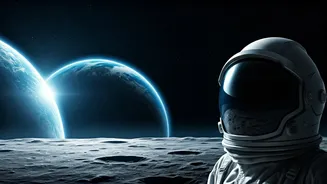
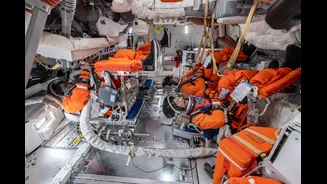
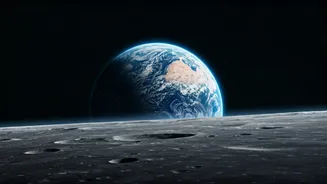
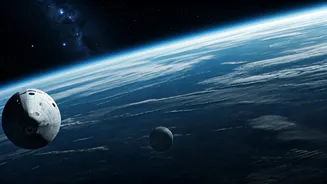
The Artemis II mission, currently en route around the Moon with a crew of four astronauts, has unveiled its inaugural set of photographs depicting Earth
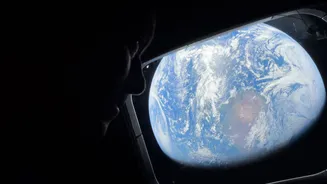
as seen from the Orion spacecraft. These images provide a contemporary viewpoint of our home planet, captured through the spacecraft's windows as it traverses the vast expanse of space. One particularly striking photograph, taken by mission commander Reid Wiseman, showcases Earth appearing as a luminous orb suspended against the darkness, its cloud patterns vividly displayed as if just emerging on the horizon. Another image presents a more expansive view of the entire globe, emphasizing the deep blues of its oceans and a subtle, ethereal green aurora shimmering at its edges. This mission marks a significant milestone, returning humans to lunar proximity after decades, and offering these unprecedented visual records for humanity to ponder.
Then vs. Now
NASA deliberately juxtaposed a recent Artemis II photograph with an iconic image of Earth taken during the Apollo 17 mission in 1972. The comparison, shared across social media, highlighted the immense progress in space imaging technology over the intervening 54 years. The caption accompanying the side-by-side images, "1972 -> 2026. Apollo 17-> Artemis II," underscored this remarkable evolution. NASA expressed that while technology has advanced significantly, the fundamental beauty of Earth viewed from space remains constant, with the post eloquently stating, "Our home looks gorgeous from space!" This nostalgic yet forward-looking comparison resonated widely online, prompting reflection on humanity's enduring fascination with our place in the cosmos and the advancements that enable such profound perspectives.
Public Reactions Emerge
The release of these new Earth images by NASA swiftly triggered a torrent of reactions from the internet's global audience. Many users expressed awe at the clarity and beauty of the photographs, with some noting the stunning visual qualities. However, the images also prompted intriguing questions and discussions. One common observation and query revolved around the perceived differences in the Earth's appearance, with users debating potential color shifts or variations in camera quality compared to earlier space images. Speculation also arose regarding potential geographical interpretations, with some users struggling to identify familiar continents, leading to curiosity about the specific angles and lighting conditions. This public engagement underscores the powerful emotional and intellectual impact that images of Earth from space continue to have on people worldwide.
Mission Progress Update
As the Artemis II crew continued their ambitious journey, by mid-morning on Friday, they had covered approximately 100,000 miles (160,000 kilometers) from Earth. Their trajectory was steadily guiding them towards the Moon, with a similar distance remaining to achieve lunar proximity, which they were slated to reach on Monday. The mission's primary objective involves orbiting the Moon in the Orion capsule without attempting a landing. This orbital maneuver is a crucial step in NASA's broader lunar exploration objectives. The spacecraft had successfully been placed on its intended path following a critical engine burn conducted on Thursday night, ensuring the mission's continued advancement toward its celestial destination and paving the way for future lunar endeavors.
Astronauts' Impressions
Mission specialist Christina Koch, poised to make history as the first woman to circumnavigate the Moon, shared her profound experience with the breathtaking views. During a video call, she conveyed that while she anticipated seeing Earth from space, the actual experience surpassed all expectations. Koch described the surreal sensation of observing our home planet simultaneously illuminated by sunlight and catching the gentle glow of the moon at night. She highlighted the beautiful beam of the sunset visible on Earth, emphasizing the overwhelming beauty of the sight. The anticipation of gaining similar perspectives of the Moon and the subsequent journey back home filled her with excitement, painting a vivid picture of the emotional and sensory richness of the Artemis II mission from an astronaut's viewpoint.