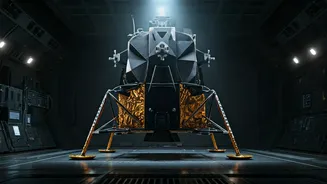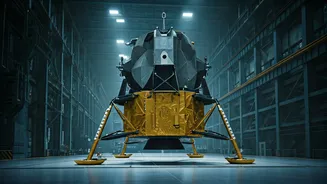




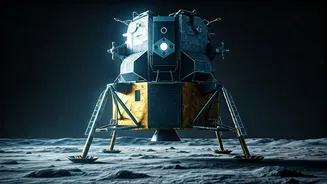
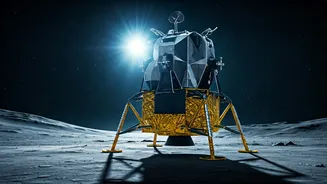
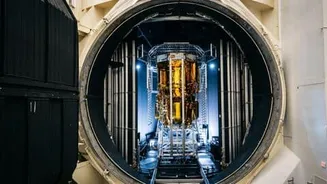
Spacecraft Survives Vacuum
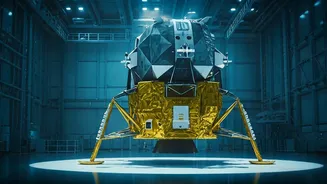
In a pivotal moment for lunar exploration, Blue Origin's uncrewed spacecraft, known as Blue Moon Mark 1 or 'Endurance', has successfully navigated a crucial
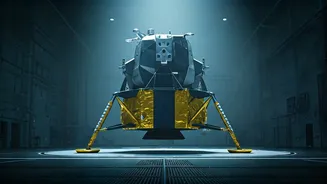
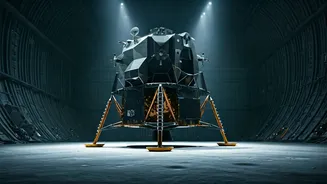
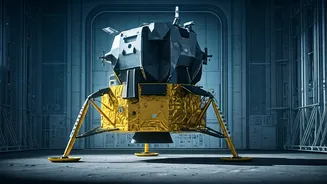
phase of testing. Engineers subjected the lander to the extreme conditions it will face during its journey to the Moon within NASA's specialized Thermal Vacuum Chamber A at the Johnson Space Center. This extensive testing aimed to validate the lander's structural integrity and operational readiness by replicating the harsh environment of space, including extreme cold and near-vacuum conditions. The results of these simulations are instrumental in confirming that 'Endurance' is robust enough for its demanding lunar mission, a significant step forward in developing reliable lunar delivery systems.
Cargo Delivery Focus
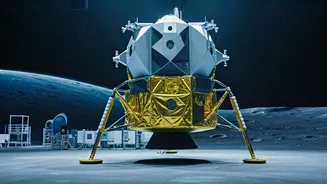
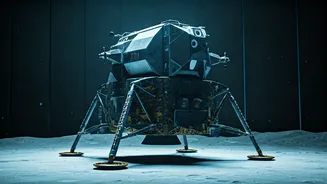
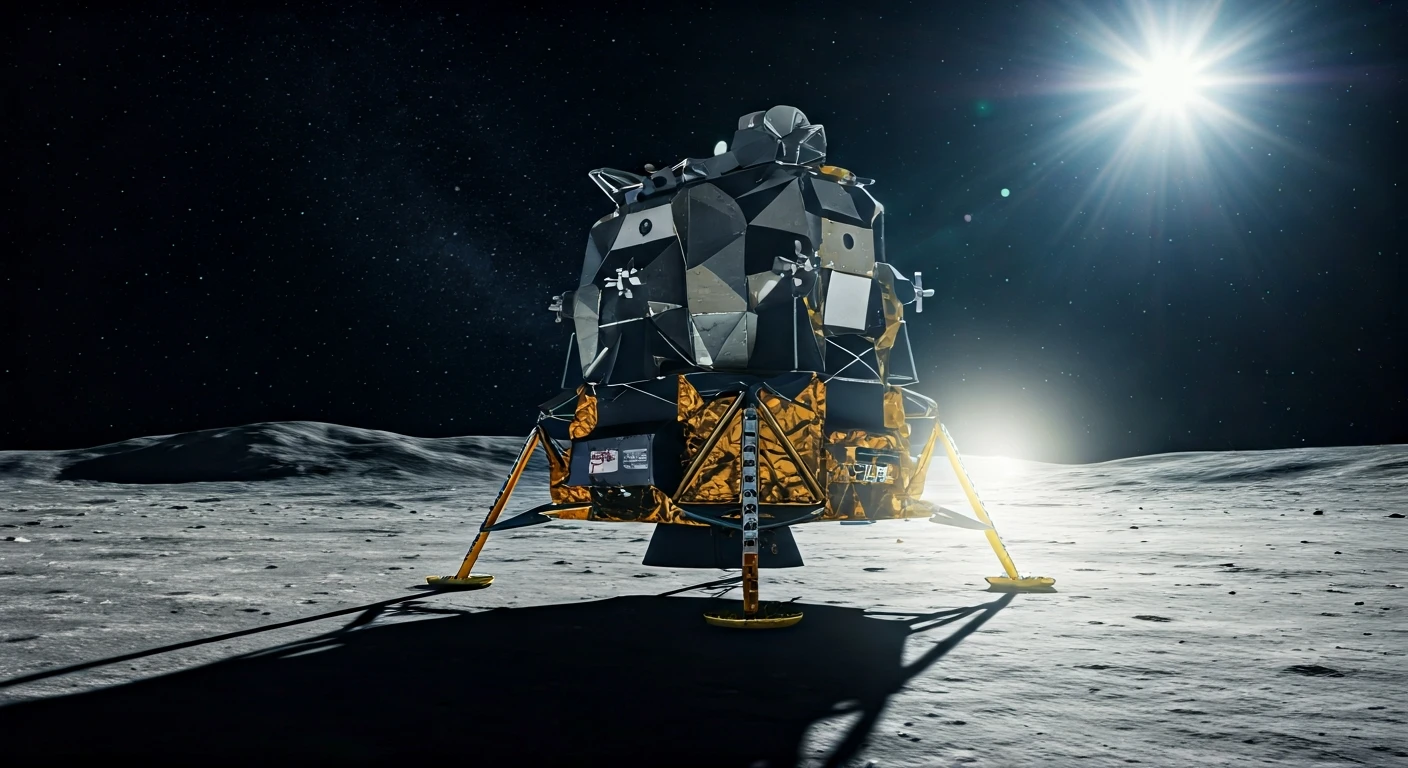
The Blue Moon Mark 1 is designed not for carrying astronauts, but for a critical role in supplying the Moon: delivering essential cargo and equipment. This unmanned vehicle is a key component of the ambitious Artemis program, which aims to establish a sustained human presence on the lunar surface. 'Endurance' will demonstrate crucial technologies for a successful landing, including precision landing techniques, the effective management of cryogenic fuel systems, and the ability to navigate and control itself autonomously. The chosen landing site is the Moon's south pole, an area of great interest due to its potential for supporting future lunar bases and the presence of water ice, a vital resource for extended missions.
Science and Future Missions
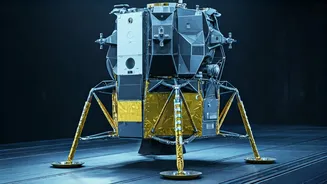
Beyond its cargo-carrying capacity, the Blue Moon MK1 is equipped to conduct its own scientific investigations and carry experiments. Notably, it will host the Stereo Cameras for Lunar Plume-Surface Studies, a suite of high-resolution cameras designed to meticulously document the interaction between the lander's engine exhaust plume and the lunar surface during descent. Another scientific instrument aboard is the Laser Retroreflective Array. Crucially, the development and testing of MK1 are foundational for Blue Origin's Mark 2 lander, a larger, crewed version intended to ferry astronauts between lunar orbit and the Moon's surface. The knowledge gained from MK1’s design and operational testing will directly enhance the safety, dependability, and planning for future crewed lunar landings, making the Moon a more accessible destination.