



AI Takes the Mouse
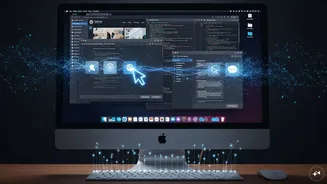
Anthropic's Claude AI has achieved a significant milestone, gaining the capability to interact with and operate a user's computer. This transformative
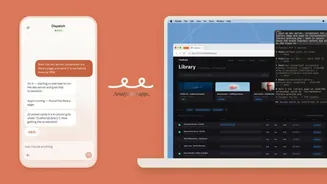
development allows the AI to perform tasks that previously required direct human input, such as navigating file systems, opening applications, and even executing commands as if a person were using a keyboard and mouse. This is made possible through advanced connectors that link Claude to various software, and a fallback mechanism where Claude can manually interact with the interface by simulating clicks, scrolls, and typing. This enhanced functionality moves AI beyond simple information retrieval towards active task completion, opening up a new paradigm for digital assistance and automation. The initial rollout of this 'computer-use' feature is available as a research preview for MacOS users subscribed to Claude Pro and Claude Max plans, with Windows support anticipated soon.
Dispatching Tasks Seamlessly
The 'Dispatch' feature within Claude's Cowork environment empowers users to delegate tasks remotely via their smartphones. Imagine sending a prompt from your phone to Claude, which then proceeds to handle the task on your computer, freeing you to focus on other activities. This streamlines workflows, allowing for the execution of routine computer operations like checking emails or exporting files. Moreover, users can initiate live Claude Cowork or Claude Code sessions to generate code or run tests. While these functionalities are still in their early research preview stages, indicating that more complex tasks might require refinement, the core concept is to offer a hands-free, efficient way to manage digital responsibilities. User approval is a critical component, especially when Claude needs to access an app without a pre-existing connector.
Strategic Acquisitions & Evolution
Anthropic's aggressive expansion in AI capabilities is underpinned by strategic acquisitions. The recent incorporation of Vercept, an AI startup specializing in tools for complex agentic tasks and cloud-based remote computer operation, has significantly bolstered Anthropic's ability to deliver enterprise-scale AI computer-use. This follows their earlier acquisition of Bun, a developer-focused firm that built tools for orchestrating AI agents in production. These consolidations are pivotal in evolving Claude from a conversational model into a robust execution platform capable of real-world interaction. The integration of Vercept's expertise, particularly in bridging the gap between AI reasoning and grounded environmental interactions, was a key driver for Anthropic's interest, enhancing Claude's ability to navigate dynamic digital landscapes.
The OpenCLAW Challenge
Anthropic's latest advancements arrive amidst the burgeoning popularity of 'OpenCLAW,' an open-source framework that facilitates the orchestration of autonomous AI agents. OpenCLAW has fostered an ecosystem where AI agents, or 'claws,' can autonomously execute specialized tasks, even spawning sub-agents, with access to local data and file systems. This has led to innovative applications such as flight bookings, smart home control, and social media management. While OpenCLAW setups might appear more experimental and require technical configuration, Anthropic's integrated approach offers a potentially more user-friendly and reliable solution. The 'Computer Use' capability from Anthropic aims to provide a seamless experience, potentially diminishing the need for users to manage complex self-hosting solutions like Mac Minis, which have seen increased demand. This presents a direct competitive dynamic between a proprietary, integrated solution and a rapidly evolving open-source alternative.
Navigating Security Landscapes
Both Anthropic's Claude and frameworks like OpenCLAW introduce significant security considerations. OpenCLAW's requirement for extensive access to user data and systems, while enabling powerful personal assistant functionalities, raises concerns about potential misuse and data tampering. This has spurred the development of safety-focused forks and security enhancements, such as Nvidia's NemoClaw. Similarly, Anthropic acknowledges the inherent security risks associated with Claude's computer-use capabilities, including potential prompt injection attacks. The company has implemented safeguards but explicitly advises users against granting access to applications handling highly sensitive data, recognizing that these advanced AI interactions are still in their nascent stages and require careful management and user discretion to ensure safety and trust.