








The Hallmark Clue
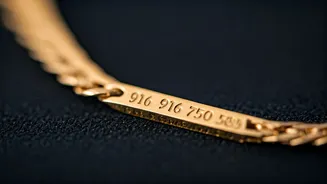
Your first line of defense when evaluating gold jewellery lies in the hallmark stamp. In India, authentic gold items should bear the Bureau of Indian Standards
(BIS) hallmark, which includes the BIS logo, a purity indicator such as '22K916' for 22-karat gold, or '18K750' for 18-karat gold, and the jeweller's unique identification mark. The absence of any hallmark is a significant warning sign. However, it's crucial to remember that a stamp alone isn't foolproof, as counterfeit markings can unfortunately exist. This initial check serves as a preliminary indicator, but further investigation might be required to confirm the metal's true nature.
Magnetism Matters
Gold itself possesses no magnetic properties. A straightforward method to test your jewellery involves using a strong magnet. By bringing the magnet close to the gold piece, observe its reaction. If the jewellery is noticeably drawn to the magnet, it strongly suggests the presence of other, magnetic metals mixed within, indicating it's likely not pure gold. It's important to note, however, that some metals that aren't gold are also non-magnetic. Therefore, this particular test is best utilized as a preliminary screening tool rather than a definitive confirmation of purity.
Spotting Discoloration
A careful examination of your gold jewellery can reveal tell-tale signs of its authenticity by looking for discoloration. Pay close attention to areas that experience frequent friction, such as edges, clasps, and parts that come into contact with your skin. If you observe any fading of the gold colour, the emergence of underlying silver or copper tones, or the appearance of dark spots and peeling, it might indicate that the piece is merely gold-plated rather than solid gold. Genuine gold is known for its resistance to tarnishing and typically maintains a uniform, rich colour over time.
Ceramic Plate Test
An interesting yet slightly risky test involves using an unglazed ceramic plate. Gently rub a portion of your gold jewellery against the unglazed surface of the plate. If a streak of gold colour appears, it is a positive sign that the item might be genuine gold. Conversely, if a black streak is left behind, this typically signifies that the jewellery is made from a different metal. It is advisable to perform this test with caution, as it could potentially leave minor scratches on delicate or highly polished gold pieces, so consider the value and finish of your item before proceeding.
Skin Reaction Gauge
Pure gold typically does not react with human skin. A significant indicator of potential non-authenticity can be observed if your gold jewellery leaves green or black marks on your skin after wear. Such discoloration often suggests that the item contains a substantial amount of other metals alloyed with the gold. However, it's important to acknowledge that factors like perspiration, applied cosmetics, and individual skin chemistry can also lead to skin discolouration. Therefore, this test should not be the sole basis for determining authenticity and is best considered alongside other methods.