







Core Allegations Unveiled
The legal battle initiated by Elon Musk against OpenAI centers on a fundamental accusation: that the organization has strayed significantly from its original
charter. Musk contends that OpenAI, once envisioned as a non-profit entity dedicated to advancing artificial intelligence for the broad benefit of humanity, has increasingly prioritized commercial gains and has been unduly influenced by its major partner, Microsoft. This alleged shift is seen as a violation of the foundational principles upon which OpenAI was established. The trial aims to scrutinize these claims, examining whether the company's pursuit of advanced AI models, such as GPT-4, and its deep integration with Microsoft's commercial objectives have indeed compromised its initial mission and ethical framework. The testimonies of key figures are expected to provide clarity on the extent of this alleged deviation and the motivations behind OpenAI's strategic evolution.
Nadella's Perspective on Partnership
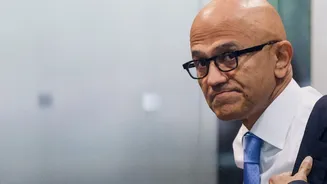
Microsoft CEO Satya Nadella's testimony, delivered remotely, primarily focused on articulating the nature and significance of Microsoft's substantial investment in OpenAI. Nadella positioned Microsoft not merely as an investor but as a strategic collaborator, emphasizing that the partnership was driven by the groundbreaking potential of OpenAI's AI technologies. He asserted that Microsoft views OpenAI as an independent partner and trusts its leadership to navigate the complexities and challenges inherent in developing advanced AI. Furthermore, Nadella addressed the ongoing concerns about OpenAI's strategic direction, stating that Microsoft has faith in the company's management. His statements also clarified that Microsoft's substantial financial backing, totaling over $13 billion since 2019, was always intended to have a clear commercial element, involving significant discounts on computing resources and anticipating substantial marketing benefits, rather than being a simple donation. He also shared his surprise at Sam Altman's ouster, calling the board's handling of the situation "amateur city" and expressing concern for continuity, though he denied demanding Altman's reinstatement.
Sutskever's Internal Account
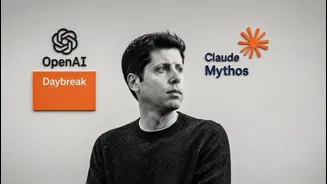
Ilya Sutskever, a pivotal co-founder and former chief scientist at OpenAI, offered a crucial internal perspective on the company's dynamics. His testimony is particularly anticipated as he was deeply involved in the organization's technical advancements and played a significant role in the internal disputes that led to Sam Altman's brief dismissal. Sutskever reportedly detailed the internal disagreements and tensions that arose concerning the company's future trajectory, specifically the ongoing debate surrounding the balance between open research principles and aggressive commercialization. His statements are expected to shed light on the events surrounding Altman's removal and reinstatement, and the broader philosophical rifts within the AI community. Sutskever also testified to spending a year gathering evidence of Altman's alleged pattern of dishonesty for the board, a collection reportedly spanning 52 pages. He also confirmed discussions with rival Anthropic about a potential merger after Altman's ouster, though he expressed no enthusiasm for such a move. His personal stake in OpenAI was disclosed to be worth approximately $5 billion as of November 2025, and around $7 billion currently.
AI Safety and Ethical Dimensions
Beyond the corporate and legal disputes, the trial has also brought to the forefront critical discussions surrounding the technical aspects of AI development, including robust safety protocols and the potential risks associated with highly advanced artificial intelligence. The testimonies are anticipated to delve into the ethical considerations that are paramount in the deployment of such powerful technologies. Key areas of focus include the proprietary nature of OpenAI's cutting-edge models, the extent of Microsoft's influence and control over these developments, and the broader implications for the future landscape of AI research and development. This includes examining the inherent tension between OpenAI's initial commitment to open-source principles and its current trajectory of developing closed, proprietary models, raising questions about accessibility, transparency, and accountability in the field of artificial intelligence.