


Conflict's Lingering Economic Shadow
The recent geopolitical conflict between Iran and the US, which began in February 2026, may have reached a pause, but its economic reverberations are set
to become starkly evident in India Incorporated's financial results for the March quarter. As the Q4 earnings season commenced, market watchers issued warnings that the residual effects of the West Asian tensions could exert considerable pressure on corporate profitability across various industries. This disruption has reversed the positive trend of earnings estimate improvements observed in the preceding two quarters. Geopolitical instability has not only disrupted intricate supply chains but also driven up the costs of essential inputs, impacting the bottom line for numerous companies. Analysts now project a modest year-on-year earnings growth of approximately 4–6% for Nifty companies. According to insights from Motilal Oswal Financial Services, key sectors like automobiles, capital goods, logistics, technology, and utilities have experienced the most significant downward revisions in their earnings forecasts for the fiscal year 2026.
Widespread Profit Declines Expected
While some segments of the market are anticipated to demonstrate robust financial performance, a considerable number of companies are bracing for a significant downturn, with projections indicating profit decreases exceeding 20%. This widespread impact underscores the pervasive influence of the geopolitical events on the broader economic landscape. The ripple effects are not confined to a single industry; instead, they are creating challenges across a diverse range of businesses, forcing them to contend with reduced profitability. This challenging environment necessitates careful examination of individual company performances and sector-specific vulnerabilities. The sheer volume of companies expected to face such substantial profit dips highlights the systemic nature of the economic shockwaves generated by the conflict, emphasizing the interconnectedness of global stability and corporate financial health.
Energy and Auto Sectors Hit
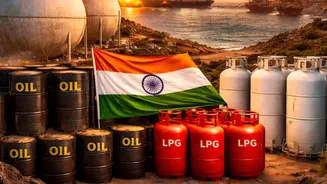
The oil and gas sector has been particularly hard-hit, with energy companies experiencing the most significant adverse effects from the surge in crude oil prices and the subsequent pressure on their refining margins. For instance, Indraprastha Gas is expected to witness a substantial profit decline of 45.1% year-on-year, while Petronet LNG's net profit is projected to fall by 23.8% year-on-year. Hindustan Petroleum Corporation Limited (HPCL) is also bracing for a profit drop of 31%. These sharp declines are attributed to increased costs associated with importing Liquefied Natural Gas (LNG) and the volatile nature of crude oil prices, which have severely squeezed profit margins. Similarly, the automobile sector is grappling with elevated raw material expenses, more costly components, and a weakening consumer sentiment, leading to reduced demand. Hyundai Motor India, for example, is forecasting a steep 26.7% decrease in its profits as its operational margins come under considerable strain due to these compounding cost pressures and market dynamics.
Other Industries Under Pressure
Beyond the energy and automotive sectors, several other industries and specific companies are also facing considerable financial headwinds. Defense and industrial companies, despite having substantial order books, are experiencing margin erosion due to rising operational costs and potential execution delays. Hindustan Aeronautics Limited, for example, anticipates a profit decrease of 32.9%. Companies like KEC International and Zen Technologies are also projected to feel the squeeze. Furthermore, a diverse group of businesses across various sectors are expected to report significant profit contractions. This includes major pharmaceutical players such as Biocon, Cipla, Dr. Reddy's Laboratories, and Zydus Lifesciences, as well as industrial giants like Hindalco Industries, Jindal Steel, GAIL, Tata Power, JSW Energy, and financial institutions like IDFC First Bank, all facing projected sharp declines in their fourth-quarter profits due to the prevailing economic conditions.
Resilient Pockets in Earnings
Despite the sector-specific challenges, the overall earnings landscape for the quarter is not entirely bleak, with certain segments expected to show resilience and even growth. The Non-Banking Financial Company (NBFC) lending sector is projected to achieve robust earnings growth of 30% year-on-year. The metals sector is also anticipated to post strong performance with a growth rate of 27% year-on-year. Private banks are expected to see earnings growth of 12% year-on-year, while the technology sector is forecasted to grow by 11%. The consumer sector is projected to experience a 10% year-on-year growth in earnings. On a broader scale, large-cap companies are expected to see a consolidated profit after tax (PAT) growth of around 7%. Mid-cap and small-cap companies, demonstrating greater agility, are anticipated to achieve even more impressive growth figures of 25% and 18% respectively, indicating pockets of strength within the Indian corporate ecosystem.
Analyst Caution Persists
Despite some areas of positive growth, market analysts are urging continued caution, pointing to potential broader demand risks on the horizon. Nuvama Wealth Management has specifically warned investors about these evolving challenges. Weak global economic conditions, compounded by supply chain disruptions stemming from the geopolitical conflict, and a noticeable slowdown in private credit trends within the United States, could exert further pressure on corporate profit margins. While revenue growth might stabilize, the lingering effects of war-induced disruptions and persistent global uncertainty justify a more conservative investment strategy. The recent ceasefire may have halted military escalation, but for Indian corporations, the economic repercussions are only beginning to surface. As the Q4 earnings season unfolds, investors will be keenly observing which sectors can effectively absorb the geopolitical shockwaves and which continue to struggle under the weight of escalating costs and a fragile global demand environment.