






Communication Blackout Explained
The Artemis II mission, a pivotal precursor to humanity's return to lunar exploration, encountered a notable challenge when communication with the Orion
spacecraft was momentarily lost. For a period of roughly 40 minutes, ground control on Earth experienced a complete silence from the orbiting vessel. This unnerving interval, while not an immediate threat to the astronauts aboard, served as a potent reminder of the inherent unpredictability and intricate nature of venturing into the vastness of space. The mission's primary objective is to serve as a vital test flight, paving the way for future lunar landings and even potential journeys to Mars. The temporary severance of communication, though brief, emphatically stressed the critical need for advanced, reliable communication networks and well-rehearsed backup strategies essential for all space endeavors. Post-mission analysis is anticipated to meticulously investigate the reasons behind this blackout to bolster the resilience of subsequent missions.
The Physics of Silence
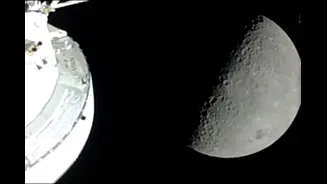
During most of their voyages, astronauts maintain a constant tether to Earth through an intricate web of communication channels, receiving vital information and reassuring messages from Mission Control. However, for NASA's Artemis II astronauts, a significant moment arrived when these connections naturally ceased. As the Orion capsule traversed the far side of the Moon, a region inherently hidden from direct Earth-based communication, the astronauts experienced approximately 40 minutes of radio silence. Far from being an anomaly or a malfunction, this period of quiet is a predictable outcome dictated by the fundamental laws of physics and the celestial mechanics of their trajectory. This unique, albeit brief, isolation offers astronauts an exceptionally rare perspective on their solitude within the immense cosmic landscape, a calculated consequence of their deep-space journey.