








Purity Revealed: The Numbers Explained
Those seemingly insignificant numbers etched onto your favorite gold rings, necklaces, or bracelets are actually vital clues to their composition. Instead
of being mere identifiers, markings like 916, 750, and 585 serve a crucial purpose: they denote the exact purity of the gold content within the piece. Understanding these subtle engravings is paramount for any savvy jewelry buyer, ensuring you're aware of precisely what you're acquiring and that the value reflects the quality. This knowledge empowers you to make confident decisions, moving beyond guesswork to a clear comprehension of your gold's worth.
916: India's Gold Standard
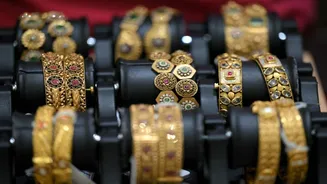
In India, the '916' stamp is exceptionally prevalent and signifies a gold purity of 91.6%, which precisely translates to 22-karat gold. This composition is a carefully balanced alloy, where the remaining 8.4% consists of other metals such as copper, silver, or zinc. These added metals are not impurities but are intentionally incorporated to enhance the durability and structural integrity of the jewelry, making it more resilient for everyday wear and intricate designs. This particular purity level is the cornerstone for the creation of most traditional Indian gold ornaments, prized for its blend of
750: The Gemstone Partner
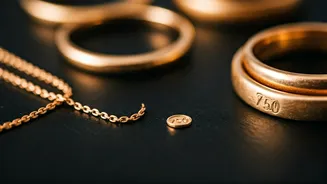
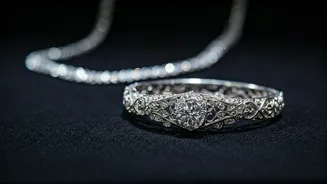
When you encounter the '750' marking on gold jewelry, it indicates that the piece is composed of 75 percent pure gold, corresponding to 18 karats. This alloy strikes an excellent balance between the malleability of higher-karat gold and the added strength needed for setting precious stones. The enhanced hardness of 18-karat gold makes it an ideal choice for showcasing diamonds and other gemstones, as it provides a secure and durable bezel or prong setting that is less prone to bending or damage. It's a popular selection for engagement rings and statement pieces where intricate gem embellishments are a key feature.
585: Modern Elegance
Jewelry stamped with '585' signifies a gold content of 58.5 percent, which is equivalent to 14-karat gold. This particular blend offers a good compromise between gold purity and increased durability, making it exceptionally suitable for contemporary and fashion-forward jewelry designs. Its inherent strength allows for more delicate and intricate crafting, often seen in lighter-weight pieces designed for modern aesthetics. This karat is frequently chosen for everyday wear jewelry and trendy items that prioritize both style and longevity without the higher cost associated with purer gold.
999: Purest Gold
The marking '999' represents the zenith of gold purity, indicating a composition of 99.9 percent pure gold, also known as 24-karat gold. While this is the most valuable and chemically pure form of gold, its extreme softness makes it impractical for crafting most types of jewelry that need to withstand daily wear. Consequently, 24-karat gold is rarely found in intricate ornaments; instead, it is predominantly utilized in the form of investment products like gold coins and bars, where its untarnished purity is its primary appeal and value.
Hallmarking: Your Assurance
In India, the Bureau of Indian Standards (BIS) presides over a critical hallmarking system that independently validates the purity of gold jewelry. A BIS hallmark is your assurance that the gold's fineness has been rigorously tested and officially verified. Modern hallmarked items typically display the BIS logo, the specific purity mark (like 916 or 750), and a unique six-digit Hallmark Unique Identification (HUID) code. This HUID code is a traceability feature, allowing consumers to verify their purchase's authenticity. While purity directly influences gold value, remember that your final bill also incorporates making charges, wastage, and applicable taxes.