





Timeless Terracotta Cooling
Long before the advent of air conditioners, ancient Indian civilizations ingeniously harnessed the power of natural materials to combat sweltering heat.
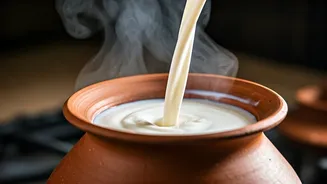
One remarkable technique, perfected over 3,000 years ago by the sophisticated Indus Valley Civilization, utilized terracotta's inherent properties for effective home cooling. This method, still relevant today, leverages the principle of evaporation, much like how our bodies cool through perspiration. The porous nature of terracotta allows moisture to seep through and then evaporate, drawing heat away from the surroundings. This ancient wisdom, documented in publications like Scientific American, highlights how earthen pots were consistently used to keep water refreshingly cool, a practice that persists in many rural Indian households even now, demonstrating an effortless, electricity-free cooling solution that has stood the test of millennia.
The Science of Porous Clay
The cooling prowess of terracotta is deeply rooted in its unique material composition. As explained by experts like Adithya Pradyumna from Azim Premji University, this fired clay is characterized by an abundance of microscopic pores. These tiny channels enable water to gradually permeate the material's surface. Once exposed to the air, this absorbed moisture undergoes evaporation. This phase change, from liquid to gas, requires energy, which is drawn from the immediate environment in the form of heat. Consequently, the surface temperature of the terracotta decreases, creating a localized cooling effect. This phenomenon mirrors the biological process of perspiration, where evaporating sweat effectively cools our skin. Terracotta's low thermal conductivity further enhances its insulating capabilities, meaning it resists the rapid passage of heat, thus helping to maintain a stable, cooler interior environment within structures it forms.
Modern Revival: Filler Slabs
Contemporary architectural practices are increasingly rediscovering and integrating these ancient, eco-friendly cooling strategies. A significant trend, as reported by The Better India, involves reintroducing clay-based elements into modern building designs. One particularly effective innovation is the revival of the 'filler slab' construction method. This technique involves strategically embedding unglazed terracotta pots, typically placed upside down, within the concrete roof slab during construction. Once the concrete sets, these embedded pots create internal hollow spaces. These air pockets serve as an excellent thermal barrier, significantly reducing the amount of heat that transfers from the roof into the living space below. Furthermore, by incorporating these hollow spaces, the overall concrete usage in the slab is reduced, which also contributes to a lower heat absorption rate by the roof itself, amplifying the cooling effect.
Dual Climate Comfort
Homes constructed using the filler slab method incorporating terracotta have demonstrated a remarkable capacity to lower indoor temperatures, with studies indicating reductions of up to 50%. This substantial cooling not only enhances occupant comfort but also leads to a marked decrease in the reliance on energy-intensive air conditioning. By minimizing the need for artificial cooling, these buildings contribute to lower electricity bills and a reduced carbon footprint, promoting both economic savings and environmental sustainability. Intriguingly, the insulating properties of the air pockets created by the terracotta pots are not limited to combating summer heat. They also help to retain warmth during colder months, effectively moderating indoor temperatures year-round. This dual functionality underscores the holistic and enduring brilliance of this ancient construction technique, offering a balanced indoor climate consistently.
Terracotta: Nature's Insulator
Terracotta, derived from the Italian term for 'baked earth,' is a fundamental ceramic material crafted from natural clay. Its production involves molding the clay into desired shapes and then firing it at relatively low temperatures, resulting in a durable yet permeable material. Typically exhibiting reddish-brown hues due to the iron content in the clay, its defining characteristic is its porosity. This inherent quality allows for the gradual absorption and release of moisture, making it ideal for cooling applications. Historically and presently, terracotta has been instrumental in creating pottery, sculptures, roofing tiles, and building components. Its enduring appeal lies in its eco-friendliness, affordability, and natural ability to manage temperature. The material's effectiveness in cooling stems from its blend of controlled airflow, moisture evaporation, and slow heat transfer, providing an efficient, natural alternative to energy-consuming modern cooling systems.