






The Incident Unfolds
An Indian tourist from Visakhapatnam, traveling from Cambodia to Laos, faced a harrowing experience at Luang Prabang International Airport. The airline
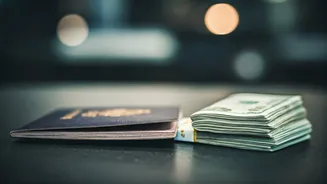
staff demanded she produce $400 USD in cash as proof of funds, a requirement she had not encountered previously. Despite having traveled from Bangkok to Cambodia just two weeks prior, where she successfully paid for her visa on arrival using a card, she was inexplicably denied boarding in Laos. She presented various forms of verification, including bank statements, her travel history, and confirmation of her paid Cambodian visa, yet the airline remained steadfast in its demand for physical cash. This situation left her feeling humiliated and stranded, prompting her to share her ordeal online to warn other Indian travelers.
Conflicting Regulations
The traveler's experience raises questions about the official entry requirements for Indian nationals in Southeast Asian countries. According to the Indian Ministry of External Affairs, Cambodia offers a visa-on-arrival facility for Indian citizens, stipulating requirements such as confirmed hotel bookings and return flight tickets. However, the ministry's website also notes that Cambodian Immigration Police 'may ask to show some cash in USD (minimum USD 500$ for each passenger).' Curiously, the criteria for Laos regarding visa-on-arrival for Indian nationals is left blank on the MEA portal, suggesting a lack of clearly defined cash mandates. This discrepancy between stated regulations and on-ground enforcement creates confusion and vulnerability for travelers.
Expert Insights on Cash Proof
GS Bawa, Secretary General of the Air Travellers Association and former GM of the Airports Authority of India, sheds light on the matter. He clarifies that while there isn't a universally enforced law mandating travelers to carry a specific amount of cash, immigration officials, particularly in certain countries like Cambodia, may indeed request proof of funds. This can include cash, credit cards, or bank statements to ascertain that a traveler can financially support their stay. Bawa mentions that some travelers, especially those of particular nationalities, might be asked to show up to $500-$1000, emphasizing that this is not a rigid rule but rather a discretionary measure. He also pointed out that some countries might have a preference for cash transactions due to less developed digital payment infrastructure.
Navigating Travel with Cash
To avoid the kind of distress experienced by the Indian tourist, Bawa offers practical advice. He recommends carrying some US Dollar cash as a backup, alongside access to bank statements and credit cards, to demonstrate genuine tourist intent. For countries where the US Dollar is widely accepted, it's a practical currency to have. Crucially, travelers must ensure that any USD notes they carry are in good condition – crisp, clean, and free from tears, as damaged bills are often rejected. He also reminds travelers that any foreign currency exceeding $10,000 must be declared. Strategic planning, including understanding visa, immigration, and currency regulations well in advance, is paramount for a smooth international journey.
Shared Experiences & Recommendations
The initial Instagram post resonated with many, as numerous followers shared similar distressing encounters. One traveler recounted being asked to show $800 in cash when flying from Bangkok to Cambodia, contrasting their experience with that of a Chinese tourist who was seemingly exempt from the same demand. Another traveler shared instances of being asked for $500 and $300 in cash for flights to and from Cambodia. These anecdotes underscore a potential pattern of selective enforcement. Bawa suggests that such requirements often stem from a country's past experiences with different traveler demographics. He advocates for clearer, public communication of these rules to travelers beforehand, minimizing inconvenience and ensuring genuine tourists are not subjected to undue scrutiny or denied passage.