






Historic Trade Agreement
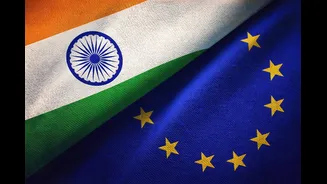
The culmination of two decades of negotiations, the India-EU Free Trade Agreement (FTA) represents a major milestone in strengthening economic relations.
The pact was announced by Prime Minister Modi, and it was also highlighted by Ursula von der Leyen, the head of the EU. This deal is designed to serve as a 'living agreement,' incorporating multiple review mechanisms to adapt to evolving market conditions and ensure its long-term relevance. It promises to double exports and lower tariffs on 96% of goods, opening up new avenues for trade and investment between India and the EU. Furthermore, the agreement emphasizes the strategic importance of this partnership, paving the way for further collaboration across various sectors.
Energy Sector Opportunities
A key aspect of this agreement is the vast potential for the energy sector, with an estimated $500 billion opportunity. As India and the EU seek to diversify their energy sources and address climate change, this agreement presents a crucial framework for cooperation. This includes boosting trade in oil and petroleum products. The agreement sets the stage for collaborative projects in renewable energy, energy efficiency, and sustainable technologies. Additionally, this collaborative approach aligns with global efforts to achieve energy security while promoting a transition towards a cleaner and more sustainable energy future. Canada has also pledged to grow oil and petroleum trade with India, reinforcing the global significance of this agreement.
Enhanced Market Access
A significant benefit of the India-EU FTA is the enhanced market access it provides for both sides. India is set to gain access to the EU market for over 99% of its exports, as stated by the Indian Minister of Commerce and Industry. This includes significant tariff reductions, leading to a decrease in the cost of goods. Simultaneously, EU companies will see improvements in their access to the Indian market. For instance, the deal will provide EU automakers a quota six times larger than that offered to the UK, and tariffs on cars will be reduced. This broader access is expected to boost competitiveness, create jobs, and stimulate economic growth across both regions. European wines will also become less expensive following the FTA.
Impact and Future Outlook
The India-EU FTA is designed to drive significant positive impacts across various sectors. The trade deal is poised to double exports, indicating robust growth potential for Indian businesses, and also stimulating market competitiveness. Furthermore, this agreement emphasizes the importance of a dynamic approach, with multiple review mechanisms to ensure that the terms remain relevant and beneficial. This commitment to continuous adaptation will enable the agreement to address emerging challenges and opportunities, fostering a robust and resilient trade relationship. As the deal is implemented, stakeholders can anticipate a surge in trade, investment, and collaboration, cementing a strong economic partnership.