






Omni: A New World Model
At the forefront of innovation, Google introduced its groundbreaking 'Omni' world model. This sophisticated AI is designed to understand and simulate the complexities
of the real world, marking a significant stride towards achieving artificial general intelligence (AGI). The model's ability to process and learn from vast amounts of information allows it to build comprehensive and dynamic representations of our environment. This capability is crucial for developing AI systems that can reason, plan, and act with a deeper understanding of context. The implications are far-reaching, promising to enhance AI's effectiveness across various domains by providing a more robust foundation for intelligent decision-making and problem-solving. This launch underscores Google's commitment to pushing the boundaries of AI research and development.
Antigravity 2.0 Takes Flight
The Antigravity platform has undergone a significant evolution, with the unveiling of Antigravity 2.0. This updated version emphasizes an 'Agent First' philosophy, aiming to create a more optimized and agent-centric user experience. A key feature is a standalone desktop application designed for seamless agent interaction. Furthermore, Antigravity 2.0 expands its suite of agentic capabilities, services, and integrations. It now includes a full Command Line Interface (CLI) experience and a Software Development Kit (SDK) with native voice support through Gemini Audio Models. Integrations with platforms like Android, Firebase, and Google AI Studio are also being bolstered, making it easier for developers to build and deploy intelligent agents. This makes Antigravity a more powerful and accessible tool for creating sophisticated AI-driven applications.
Gemini Spark: Your Personal Agent
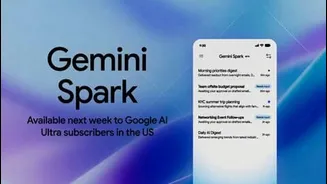
Gemini Spark emerges as a new personal AI agent designed to streamline users' digital lives by taking actions on their behalf under explicit direction. Operating on dedicated virtual machines within Google Cloud, Spark is powered by Gemini 3.5 and the Google Antigravity harness, enabling it to execute long-running tasks efficiently in the background, freeing users from constant oversight. Initially, Spark will integrate with Google's own tools, with plans to extend to third-party applications through MCP in the coming weeks. The potential for Gemini Spark is immense, promising to automate mundane tasks, manage complex workflows, and provide proactive assistance. It aims to be a 24/7 digital companion, making technology more intuitive and less demanding for everyday users.
Smarter Search and AI Integration
Google Search is undergoing a radical transformation, deeply integrating advanced AI capabilities to offer a more dynamic and personalized experience. The introduction of an intelligent search box, powered by Gemini 3.5 and Antigravity, allows Search to build ideal formats for every query in real-time. This includes dynamic layouts, interactive widgets, and fully functional experiences generated on the fly, customized to user intent. Search Pro can now proactively offer to build tools like personalized weekend planners directly from search queries, utilizing integrated coding capabilities to generate custom UIs and interactive visuals. By securely connecting to personal data sources like Gmail, Photos, and Calendar, Search can reference receipts, events, and travel plans to deliver exceptionally relevant results. This represents a significant leap beyond simple auto-completion, placing powerful AI tools directly at users' fingertips for multimodal interactions across text, images, files, and videos.
Gemini 3.5 Flash and Content Verification
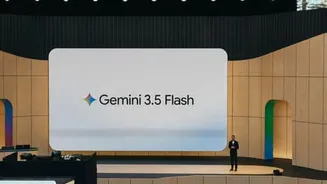
The event highlighted the widespread rollout of Gemini 3.5 Flash, a highly capable and remarkably fast AI model. Google states that Flash outperforms Gemini 3.1 Pro across most benchmarks, offering superior intelligence coupled with significantly faster output speeds. It's described as being 4 times faster than other frontier models in terms of output tokens per second and is exceptionally lightweight to use. Internally, 3.5 Flash has proven to be a game-changer, dramatically accelerating development processes. Beyond model performance, a major focus was on enhancing content authenticity. Synth ID, which has already been applied to over 100 billion images and videos, is being further integrated across products. Content credentials verification will now indicate if content originated from AI or a camera, and if it has been edited with generative tools, providing transparency and trust in the digital information landscape.