






Vast Harvest, Little Reach
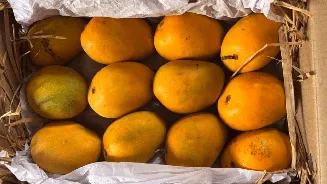
India stands as a titan in global agriculture, leading in mango production with a staggering 22.8 million metric tonnes in FY2024-25 alone. Similarly,
it dominates the spice market and ranks second for fruits and vegetables. Yet, a disheartening 30 to 40 percent of this bounty is lost before it reaches consumers. While food irradiation offers a potent solution to extend shelf life and combat spoilage, its implementation in India has been remarkably slow since its introduction. Despite the potential to drastically reduce these post-harvest losses and enhance India's export capabilities for perishable goods, the technology's widespread adoption remains elusive, leaving a significant gap between production capacity and realized value.
Understanding Irradiation's Role
Food irradiation is a sophisticated process employing controlled ionizing radiation to preserve food. This technique effectively eliminates pests, insects, harmful microbes, and pathogens, thereby significantly extending the shelf life of a variety of food items. It also adeptly slows down sprouting and ripening processes. The applications are broad, covering staples like potatoes, onions, spices, mangoes, cereals, pulses, and oilseeds. Crucially, despite the term 'irradiation,' the food treated does not become radioactive; it's essentially a sophisticated form of cold preservation. For international trade, irradiation serves a vital phytosanitary purpose, ensuring compliance with the stringent quarantine regulations of importing nations, particularly vital for sensitive agricultural exports.
Infrastructure Gaps and Costs
The journey of food irradiation in India, initiated with the first plant in Navi Mumbai in 2000, has been a slow crawl. Twenty-six years later, the nation boasts only 18 operational plants, as per the Bhabha Atomic Research Centre (BARC). The situation is even more constrained for export purposes, with merely four facilities certified for international shipments, primarily handling mangoes. This scarcity is exacerbated by geographical limitations; many plants are located far from agricultural hubs, creating logistical nightmares. The substantial investment required, approximately ₹10 crore to ₹15 crore per plant (excluding land), coupled with a modest daily processing capacity of about 30 tonnes, makes economic sense difficult, especially when compared to more versatile integrated packhouses which can handle higher volumes more efficiently. This high capital expenditure and operational cost present a major hurdle.
Farmer Incentives and Market Demand
Beyond the infrastructure challenges, a significant barrier to food irradiation's widespread adoption in India is the lack of compelling economic incentives for farmers and traders. Experts note that improved quality or extended shelf life due to irradiation often doesn't translate into higher prices at the farm gate or in domestic markets. Since the majority of India's produce is consumed internally, the demand for irradiation treatment is largely confined to export-driven supply chains. Farmers remain unconvinced as the direct benefits, such as enhanced pricing, are not clearly realized. Without a tangible financial advantage, there is little motivation for them to invest time or resources in adopting this technology, leading to limited uptake, particularly for produce destined for local consumption or neighboring countries where irradiation is not a mandatory requirement.
Export Ambitions and Certification Hurdles
India's global standing as a top producer of fruits, vegetables, and spices is starkly contrasted by its meager export volumes. However, demand for Indian agricultural products, especially mangoes, is booming in international markets. For instance, the US market shows immense appetite for Indian mangoes, with shipments often selling out rapidly at premium prices. To access markets like the US, irradiation is a non-negotiable phytosanitary requirement. Despite this demand, India has only four US-approved irradiation facilities, creating significant bottlenecks during peak export seasons. The limited capacity of even busy facilities, like the one in Vashi, Navi Mumbai, which can process about five tonnes of mangoes daily, often leads to capacity constraints and potential delays. This reliance on a few certified plants also heightens the risk of disruptions, as evidenced by past rejections of consignments due to documentation errors, leading to substantial financial losses. Moreover, major producing regions like Uttar Pradesh lack any USDA-approved facilities, making exports logistically complex and costly.
Policy Push vs. Viability
Recognizing the potential, the Indian government has announced significant financial support, earmarking ₹1,000 crore under the Pradhan Mantri Kisan Sampada Yojana to establish 50 multi-product food irradiation units nationwide. The aim is to bolster food safety, extend product shelf life throughout the supply chain, and elevate India's export readiness. However, a critical question remains: will these new plants be commercially viable and genuinely accessible to farmers? Experts are divided, suggesting that simply increasing capacity might not address the core issues. Wider adoption hinges not only on subsidies and infrastructure but also on enhancing farmer awareness, integrating irradiation facilities with robust cold chains and packhouses, and crucially, creating stronger financial incentives for both farmers and exporters. Until these multifaceted challenges are met, food irradiation in India is likely to remain concentrated on specific export-oriented crops and seasonal demands, rather than becoming a widespread tool for reducing national food loss.