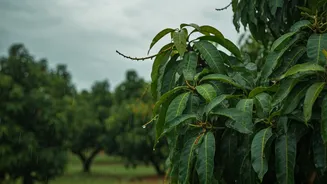









Rain's Unwelcome Guest
The unseasonal rain has become a significant problem in India, especially for mango farmers. The timing of rainfall is crucial for mango cultivation, and
when the rain arrives unexpectedly, it can cause severe harm. The erratic weather patterns disrupt the normal lifecycle of mango trees, from flowering to fruit development. This can lead to a lower yield, reduced quality, and even complete crop failure in the worst-case scenarios. The mango industry is a substantial part of India's agricultural economy, and therefore the impacts extend beyond individual farms, affecting the overall trade and markets.
Impact on Mango Orchards
The effects of unseasonal rainfall on mango orchards are multifaceted and damaging. The excess moisture caused by the rain can trigger fungal diseases that attack the flowers and fruits. These diseases can quickly spread, destroying a significant portion of the harvest. Moreover, heavy rain can physically damage the delicate flowers and developing fruits, causing them to fall prematurely. Such damage will reduce the total yield and lower the market value of the crop. The disruptions can affect the fruit's taste and appearance, as the moisture alters the sugar content and texture. Farmers are forced to grapple with these challenges, often with limited resources and facing financial losses.
Economic Ramifications Grow
The unseasonal rainfall's effects extend far beyond the orchards, creating economic challenges. The reduced mango yield will mean lower incomes for farmers, who depend on these crops for their livelihoods. This will ripple through the local economies, affecting the suppliers, laborers, and businesses that support the mango industry. In addition to the direct economic impacts, there are implications for export markets. India is a major exporter of mangoes, and a diminished harvest could affect the country's trade position. Higher prices in domestic and international markets are also likely to arise, making this beloved fruit less accessible to consumers. Ultimately, the future of the mango industry is now under scrutiny due to climate uncertainties.
Farmers' Resilience Tested
Indian mango farmers are resilient, but are now facing unprecedented challenges. Facing unseasonal rainfall, farmers are exploring various measures to minimize damage and protect their crops. This includes implementing disease control methods, improving drainage systems, and using protective coverings to shield the trees. They are adapting their practices to manage the effects of the weather. These adaptations require financial investment and technical knowledge, putting further strain on farmers already dealing with unpredictable weather patterns. Governments and agricultural research institutions should provide support to help farmers adapt to changing conditions and ensure that the legacy of the 'king of fruits' continues.
Future Outlook Uncertain
The future of India's mango industry hangs in the balance, shaped by the effects of unseasonal rainfall. Climate change is predicted to bring more frequent and intense weather events, which will increase the risks to agricultural production. To address these issues, a multifaceted approach is needed. This includes promoting climate-resilient farming practices, investing in agricultural research to develop more resistant mango varieties, and providing farmers with access to better information and resources. Furthermore, policies that support climate change mitigation and adaptation are critical to protect mango production. Only with coordinated efforts can India's farmers cope with this and safeguard the future of the mango, an essential element of Indian culture and economy.