




Why Grapes Need Extra Care
Grapes often harbor pesticide residue and dirt due to their growth habit and delicate skins. Their tightly packed berries, small crevices, and porous surface
make them prone to trapping chemicals, which are difficult to wash off with plain water alone. This vulnerability necessitates a more thorough cleaning approach than a simple rinse, especially for children, to reduce exposure to agricultural treatments. Understanding this makes proper cleaning a crucial step before consumption.
Initial Rinse Foundation
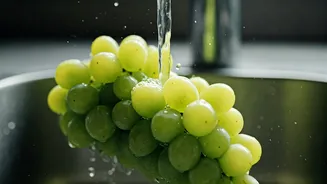
Begin the cleaning process with a foundational rinse under cool running water for approximately 20 to 30 seconds. Place the grapes in a colander or large bowl and gently rub them with your hands. This initial step is effective in dislodging loose debris, dust, and some superficial residues, significantly reducing the initial pesticide load. While not a complete solution, it prepares the grapes for more intensive treatments by removing the outermost layer of contaminants.
Baking Soda's Pesticide Power
Harness the power of baking soda, a scientifically recommended method for breaking down pesticide molecules. Create a solution by mixing 1 teaspoon of baking soda into 1 litre of water. Submerge the grapes in this alkaline mixture for 10 to 15 minutes. The baking soda's chemical properties interact with and loosen pesticide residues from the grape skin. Following this soak, gently rub the grapes and rinse them thoroughly with clean water to remove a substantial portion of surface chemicals.
Vinegar for Germs
Incorporate a vinegar wash to effectively eliminate germs and bacteria from your grapes, alongside pesticide reduction. Prepare a diluted solution by combining one part white vinegar with three parts water. Allow the grapes to soak in this mixture for 5 to 10 minutes. The mild acidity in vinegar helps to dissolve any remaining residues and disinfect the fruit. A thorough rinse afterward will remove any lingering vinegar taste or smell, ensuring the grapes are both clean and safe.
Gentle Rubbing and Drying
After the washing and soaking stages, it's essential to gently rub each grape bunch. This physical friction helps to dislodge any residual contaminants that might still be clinging to the surface. Following this, ensure the grapes are properly dried. You can either air-dry them or pat them gently with a clean kitchen towel. Dry grapes not only last longer in storage but also significantly reduce the likelihood of mold development, preserving their freshness.
Proper Storage Practices
Once your grapes are meticulously cleaned and dried, proper storage is key to preventing recontamination. Store them in a breathable container, preferably in the refrigerator. It is advisable to keep them unsealed or loosely covered, rather than in airtight containers, to allow for air circulation. Avoid washing grapes and storing them while still wet, as excess moisture can promote bacterial growth. For maximum freshness and safety, consider washing only the portion you intend to consume immediately.