








Market Plunge Details
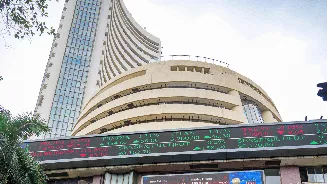
The Indian stock market experienced a pronounced decline on Friday, with both benchmark indices, the Sensex and the Nifty, registering substantial losses.
The BSE Sensex concluded the trading session 1,048.16 points lower, marking a 1.25% decrease to settle at 82,626.76. Simultaneously, the NSE Nifty50 saw a drop of 336.1 points, or 1.30%, finishing at 25,471.1. This widespread selling pressure was evident across the board, with nearly all stocks on the BSE closing in negative territory. Notable exceptions that managed to gain were Bajaj Finance and SBI, while prominent decliners included HUL, Eicher Motors, Tata Steel, and Titan. The broader market sentiment was also affected, as indicated by the fall in the Nifty MidCap index by 1.71% and the Nifty SmallCap index by 1.79%. The India VIX, a measure of market volatility, surged by 15.18%, signaling heightened investor caution and uncertainty in the trading environment.
Sectoral Weakness Identified
The downturn was not uniform across all sectors, with certain industries bearing the brunt of the sell-off more severely. The Nifty Metal index was particularly hard hit, experiencing a significant tumble of over 3%, reflecting concerns or selling pressure within the metals and mining industry. The Nifty IT index, despite earlier sharp declines of more than 5% during the trading session, managed to trim some of its losses but still ended the day 1.44% lower. This performance underscores the sensitivity of the Indian IT sector to global technological trends and investor sentiment. While specific reasons for the metal sector's sharp decline were not detailed, the IT sector's performance was clearly linked to the broader global tech sell-off, particularly concerning AI stocks.
Global Influences and Expert Outlook
The weakness in Indian equity markets was largely attributed to subdued global cues, particularly the ongoing sell-off in technology stocks in the US. Wall Street experienced a notable decline, with the S&P 500 logging its third consecutive session of losses. Asian markets also followed suit, with Japan’s Nikkei 225 falling 1.69%, South Korea’s KOSPI slipping 0.5%, and Australia’s S&P/ASX 200 declining 1.3%. In the US, equity indices ended sharply lower on Thursday, with the S&P 500 dropping 1.57%, the Nasdaq Composite falling 2.03%, and the Dow Jones Industrial Average declining 1.34%. VK Vijayakumar, chief investment strategist at Geojit Investment, commented that while the sell-off in AI stocks was anticipated, its timing and magnitude were unexpected. He noted that the current correction in AI stocks could be a positive for India, given its later participation in last year's AI-driven rally. However, the sharp sell-off in Indian IT stocks, a significant profit pool, presents a concern, and the full impact of what he termed the 'Anthropic shock' on the IT sector remains to be seen. He advised caution regarding panic selling in IT stocks and suggested waiting for the situation to stabilize, potentially using market turbulence to acquire high-quality growth stocks, especially in the resilient auto sector.