
FTA Momentum Grows
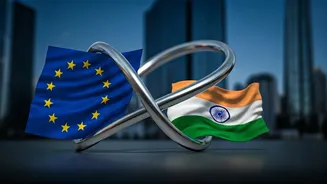
Recent discussions at Davos indicate that the Free Trade Agreement (FTA) between India and the European Union is gaining significant traction. This agreement
could redefine the economic landscape for both regions, creating new opportunities for growth and collaboration. Leaders from both sides have expressed their optimism and support for the initiative. The FTA's primary goal is to foster stronger economic ties, potentially opening doors to increased trade, investment, and technological exchange. These advancements could benefit various sectors within India, promoting economic expansion and prosperity. The progress of the FTA negotiations underscores India's dedication to engaging with global partners to foster beneficial economic interactions.
Key Players Involved
Several influential figures are pivotal in driving the India-EU FTA forward. Rajan Bharti Mittal, the Vice-Chairman of Bharti Enterprises, has been a strong proponent of the agreement, emphasizing its potential to unlock global markets and facilitate technology sharing. The President of the European Commission, Ursula von der Leyen, is also deeply involved in the discussions, highlighting the EU's commitment to strengthening economic ties with India. Their combined efforts, along with support from other key stakeholders, are crucial to the successful conclusion of the FTA. The active engagement of leaders such as Estonia's Ambassador to India, Marje Luup and Reuben Gauci, High Commissioner of the Republic of Malta to India further demonstrates the broad-based commitment to fostering strong international partnerships for collaborative development.
Benefits of the FTA
The proposed India-EU FTA holds substantial benefits for both parties, potentially unlocking global markets and fostering technological collaboration. For India, the FTA could provide greater access to European markets, promoting exports and driving economic growth. This agreement could attract foreign investment, encouraging technology transfer and innovation. Businesses in India stand to gain from streamlined trade procedures and reduced tariffs, making them more competitive. This could help enhance local production capabilities, creating more jobs. For the EU, the FTA could open new opportunities in the rapidly expanding Indian market. By improving relationships, the FTA can provide more stability in the region and improve access to the consumer market.