





Global Oil Tensions Impact
Global energy markets are experiencing heightened uncertainty, particularly impacting India's fuel landscape due to its heavy reliance on imports. Recent
US decisions regarding sanctions waivers on Russian and Iranian oil, coupled with maritime traffic disruptions linked to Iran, have introduced volatility. India imports over 40% of its crude oil and a substantial nearly 90% of its Liquefied Petroleum Gas (LPG) from West Asia, making domestic fuel prices highly susceptible to international shifts. This delicate balance means that geopolitical events far from Indian shores can directly influence the cost of essential fuels for households and industries across the nation. The current situation underscores the vulnerability of import-dependent economies to global political and economic dynamics, necessitating close monitoring of international developments and their downstream effects on domestic energy security and pricing structures.
Commercial LPG Surge
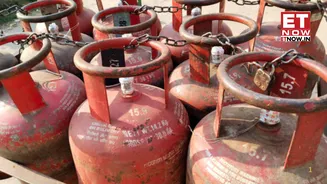
Commercial LPG prices have experienced a significant increase as of April 1st. In Delhi, a 19-kg cylinder now costs ₹2,078.50, marking an increment of ₹195.50. This surge is directly attributed to a substantial 44% jump in the Saudi Contract Price for LPG, escalating from $542 per tonne in March to $780 per tonne in April. Despite this sharp rise in commercial rates, domestic LPG prices for 14.2 kg cylinders remain steady. This divergence highlights how different market segments react to global supply and demand fluctuations, with commercial sectors often absorbing price adjustments more rapidly than the subsidized domestic market. Consumers using LPG for business purposes should brace for these higher operational costs.
Domestic LPG Rates
As of April 16, domestic LPG prices for a standard 14.2 kg cylinder remain unchanged across several major Indian cities. In Delhi, the price stands at ₹913 per cylinder. Kolkata consumers will pay ₹939, while Mumbai residents will find it at ₹912.50. Chennai's rate is ₹928.50, and Bengaluru's is ₹915.50. Hyderabad, however, has the highest domestic LPG price at ₹965 per cylinder among these listed cities. These prices reflect the current subsidies and market conditions for household cooking gas, providing a stable reference point for millions of Indian families dependent on this essential fuel for their daily needs, even as commercial rates see increases.
Commercial LPG Rates
Commercial LPG, typically used by businesses and restaurants, shows varying rates across major Indian metropolitan areas as of April 16. In Delhi, a 19-kg cylinder is priced at ₹2,078.50. Kolkata's rate is ₹2,208, while Mumbai's stands at ₹2,031. Chennai faces the highest commercial LPG price at ₹2,246.50, followed closely by Bengaluru at ₹2,161. Hyderabad's commercial LPG cylinder costs ₹2,320. These prices are considerably higher than domestic LPG rates, directly impacting the operational expenses of various businesses and food establishments nationwide, reflecting the adjusted market dynamics for non-subsidized fuel.
CNG and PNG Prices
Compressed Natural Gas (CNG) and Piped Natural Gas (PNG) prices also vary across key Indian cities as of April 16. In Delhi, CNG is priced at ₹77.09 per kg. Kolkata's CNG rate is ₹93.50 per kg, with Mumbai at ₹80.50 per kg. Chennai's CNG costs ₹91.50 per kg, and Bengaluru's is ₹88.95 per kg. Hyderabad records the highest CNG price at ₹97 per kg among these locations. For PNG, Delhi consumers pay ₹47.89 per Standard Cubic Meter (SCM). Kolkata and Mumbai both have PNG rates of ₹50 per SCM. Chennai's PNG is priced at ₹50 per SCM, Bengaluru at ₹52 per SCM, and Hyderabad at ₹51 per SCM. These figures illustrate the regional variations in natural gas pricing for both vehicular and household use.
Supply Stability Assured
Amidst concerns regarding energy prices, the Ministry of Petroleum and Natural Gas has issued assurances regarding the stability of LPG supplies nationwide. Authorities are urging the public to refrain from panic buying, emphasizing that the country's distribution network is robust and inventory levels are under constant surveillance. This proactive communication aims to prevent artificial demand spikes and ensure a smooth supply chain. The ministry also highlighted that the adoption of digital channels for LPG bookings has surged, with nearly 95% of transactions now conducted through platforms like IVRS, SMS, WhatsApp, and mobile applications, indicating a modernization of the service delivery system.
Navigating Geopolitical Risks
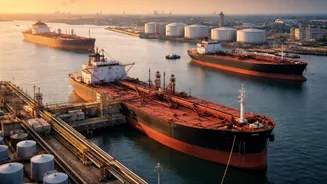
Indian vessels are actively navigating the sensitive maritime routes amidst prevailing geopolitical tensions. The Indian-flagged vessel Jag Vikram recently completed a significant passage through the Strait of Hormuz, carrying 20,400 metric tonnes of LPG. This journey was undertaken during a temporary ceasefire window, underscoring the strategic importance of maintaining supply lines even in volatile regions. The successful transit of such vessels highlights India's efforts to secure its energy imports and ensure the consistent flow of essential commodities like LPG, despite the ongoing complexities and risks associated with international shipping lanes that are crucial for global energy trade.