
A Landmark Agreement
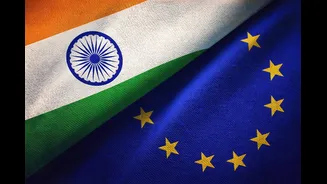
The culmination of the India-EU Free Trade Agreement (FTA) has been confirmed by Prime Minister Narendra Modi, portraying it as a significant advancement
in the economic relationship between India and the European Union. This agreement is viewed as a strategic partnership designed to solidify India's leadership in international trade. Numerous industry and trade organizations across India have applauded this agreement, characterizing it as a milestone that will substantially increase exports, investment, and India's integration within international value chains. The Confederation of All India Traders (CAIT) also celebrated the deal, suggesting that it would offer substantial advantages to traders, MSMEs, and manufacturers. Praveen Khandelwal, MP from Chandni Chowk and Secretary General of CAIT, emphasized that the agreement aligns with the Prime Minister's vision of turning India into a global manufacturing hub and advancing toward a $5 trillion economy.
Boosting Market Access
The agreement is expected to significantly improve market access for Indian goods and services within one of the world's largest economic blocs, according to Khandelwal. This deal promises to lower tariff and non-tariff barriers, thereby attracting greater foreign direct investment and fostering technology transfer and innovation. The European Union has also stated that over 90% of its goods exports to India will benefit from reduced duties as part of this agreement. This strategic move is anticipated to save EU member nations up to 4 billion euros in duties on European products. The CII (Confederation of Indian Industry) has highlighted that preferential access for over 99% of Indian exports to the EU is a “game-changer" for Indian industry, marking a strategic breakthrough in India’s global trade engagement.
Beneficiary Sectors & Growth
Various sectors are anticipated to gain from this agreement. CAIT indicates that major beneficiary sectors include textiles and apparel, leather and footwear, gems and jewellery, engineering goods, auto components, pharmaceuticals, IT and digital services, agriculture and processed foods. Additionally, MSMEs and startups are expected to explore new opportunities for global collaboration. Chandrajit Banerjee, Director General of CII, stated that the agreement strengthens the partnership between two major democracies and economies that together represent about 25% of global GDP. The CII further noted that the deal will drastically improve the competitiveness of Indian manufacturers and service providers within the EU's high-value market, while also promoting deeper supply-chain integration and long-term investment flows.