






The Savvy Airport Strategy
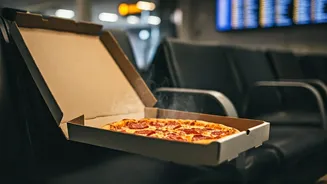
A resourceful family recently demonstrated a novel approach to managing meal costs during a travel delay, opting to have a popular pizza delivered right
to their airport gate. Faced with the prospect of exorbitant prices for food within the terminal, they saw an opportunity to employ a clever workaround. Their decision to order from a well-known pizza chain was captured and shared online, quickly becoming a focal point for discussion. The family's motivation was clear: to enjoy a familiar meal without the significant financial burden typically associated with airport concessions. This move highlights a growing trend of travelers seeking innovative ways to stretch their budgets while navigating the often-expensive world of air travel, especially when flights experience unexpected delays.
Viral Sensation and Online Reactions
The family's act of ordering pizza to their airport gate rapidly transformed into an internet phenomenon, amassing millions of views and hundreds of thousands of likes across social media platforms. This widespread attention naturally triggered a flurry of opinions and debates among online users. While many applauded the family's ingenuity and cost-saving efforts, a significant portion of the commentary focused on the potential olfactory impact of bringing a fragrant pizza into the enclosed environment of an aircraft. Concerns were raised about how the aroma might affect other passengers, with some users expressing strong negative reactions to the idea of sharing a flight with the lingering scent of pizza. This led to a diverse range of viewpoints, from those who found the idea harmless and even appealing, to those who foresaw it as a deeply unpleasant experience for their fellow travelers.
Practical Perspectives on Boarding
Adding a layer of practical insight to the online discourse, a flight attendant offered their professional perspective on the pizza-to-gate strategy. They acknowledged the appeal of eating at the airport to save money but pointed out potential logistical challenges once onboard. The primary concern raised was the pervasive smell that pizza could impart within the cabin, potentially bothering a multitude of passengers. Furthermore, the flight attendant highlighted the difficulty of disposing of bulky pizza boxes on an airplane. They explained that aircraft trash receptacles, particularly in the galley, are quite small, and large, flat boxes can occupy significant space, complicating waste management for the crew during flights. This viewpoint provided a grounded, operational perspective that complemented the more subjective passenger opinions.
Logistical Questions and Brand Banter
Beyond the debate over the smell and practicality, the family's airport pizza delivery also prompted questions about the logistics of their plan. Specifically, some internet users inquired about how they managed to retrieve their order and return to their gate after it had been delivered, especially considering the security protocols at airports. The process of ordering and receiving food once already past security checkpoints can be complex, leading to curiosity about their specific method. In the midst of this discussion, the pizza brand itself joined in on the fun, offering a playful pun in response to the online buzz. This lighthearted engagement from the brand added another dimension to the viral story, further solidifying its presence in popular internet culture.