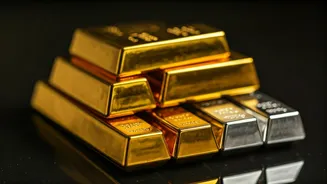

Record-Breaking Surge Observed
The financial landscape of India experienced a significant shift on January 28th, as both gold and silver prices reached historic peaks. This event was
not confined to the Indian market alone; the COMEX (Commodity Exchange) also reflected this upward trend. This coordinated increase in prices highlighted the interconnectedness of global markets and the influence of shared economic and political elements. The upward movement was a direct result of the existing global instability and the strategies adopted by central banks worldwide, reflecting a heightened sense of caution among investors. The simultaneous rise in both precious metals suggests a broader flight towards safe-haven assets amidst the uncertainties of the global financial scenario. The impact extended throughout the day with many anticipating further changes as the day progressed.
Geopolitical Tensions' Impact
One of the most significant factors propelling the surge in gold and silver prices was the prevailing geopolitical uncertainty. Events across the globe, including conflicts and political tensions, often compel investors to seek refuge in precious metals like gold and silver. These metals are traditionally considered safe-haven assets. When facing uncertainty, investors often turn to them, perceiving them as more stable compared to other volatile investments. The increased demand from investors, coupled with potential disruptions to supply chains or production, further boosts prices. The effect of geopolitical instability is thus a significant driver in increasing the value of these resources in the market. The global landscape had made investors worried and they were actively searching for stability that these metals provided.
Central Banks' Influence
Central banks play a vital role in influencing the prices of gold and silver through their monetary policies and strategic interventions. Their actions, such as changes in interest rates, bond purchases, or adjustments to currency reserves, impact market dynamics significantly. When central banks buy gold, it increases demand, leading to higher prices. Conversely, if they sell, it can result in a price decrease. Furthermore, the overall economic climate created by the policies of central banks, including inflation rates and currency valuations, significantly affects investment choices. If inflation rises, gold and silver are often seen as a hedge against the diminishing value of currency. Consequently, the strategies implemented by central banks have a direct effect on the trajectory of precious metal prices within the market.
Daily Price Movements
On January 28th, gold and silver prices across India experienced significant fluctuations, hitting fresh highs. These variations are influenced by a multitude of local and global factors. The day-to-day changes in price reflect the overall market sentiments, the actions of institutional investors, and global economic indicators. These real-time movements provide instant feedback on the market's pulse, offering critical insights for both seasoned investors and those just stepping into the world of precious metals. The prices of 22-karat and 24-karat gold, as well as silver, varied across different cities throughout India, showcasing the nuanced dynamics of regional markets and the effects of local economic conditions.
Factors Affecting Prices
Several factors combined to influence the soaring prices of gold and silver in India. The strength of the rupee against the dollar is critical, as a weaker rupee often makes imports, including precious metals, more expensive. Global demand and supply dynamics also play a significant role. If demand rises globally, or supply is constrained, prices tend to increase. Economic indicators, such as inflation rates and interest rate policies by major central banks, directly impact the attractiveness of precious metals as investments. Government policies, including import duties and tax rates, are also influential in the final price that consumers pay. The interaction of these variables creates a complex environment that drives market trends and shapes the daily price fluctuations observed.