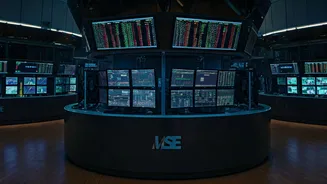

Duopoly Under Threat
For years, India’s stock market has been largely defined by the presence of two major players: the BSE and the NSE. This has created a duopoly, a situation
where two entities control the vast majority of the market share. However, this established order could soon be disrupted. The impending arrival of the Metropolitan Stock Exchange (MSE) signals a significant shift in the competitive dynamics. This development has the potential to introduce increased competition, offering investors a wider range of choices and possibly influencing trading costs and market efficiency. The emergence of a new exchange like the MSE could reshape the landscape, fostering innovation and providing alternative platforms for market participants.
MSE's Entry Implications
The entry of the MSE into the market isn't just about adding another exchange; it's about altering the fundamental structure of the industry. The impact is multifaceted, affecting everything from trading volumes to the overall competitiveness of the market. Historically, duopolies can sometimes lead to reduced innovation and higher costs for consumers. The MSE’s entry could potentially break down these barriers, forcing both the BSE and NSE to become more competitive in their offerings. This competition might take the form of lower transaction fees, better technology infrastructure, and an enhanced range of financial products. The net outcome could be a more dynamic and investor-friendly market.
Impact on Investors
The potential end of the duopoly has significant implications for investors of all types. The availability of more trading platforms provides more avenues for investment and potentially allows for increased liquidity. Increased competition among exchanges often results in more efficient price discovery, ensuring that the market reflects the true value of assets. Investors could also experience the benefit of reduced brokerage fees and enhanced access to a more comprehensive range of financial instruments. Diversification becomes easier when more options are on the table, which could lead to improved portfolio performance. Ultimately, the MSE's arrival presents opportunities for investors to enhance their trading strategies and benefit from a more competitive market environment.
Changing Market Dynamics
The addition of a third major player can reshape the whole market landscape. In a duopoly, BSE and NSE were competing, but largely without the threat of a third, equally strong competitor. With MSE entering the picture, the intensity of this competition increases substantially. Exchanges will be compelled to innovate, improve their services, and attract both institutional and retail investors. This increased competition could stimulate the market, enhancing liquidity and potentially leading to a greater number of IPOs and listings. A more vibrant market can draw more foreign investment, which further drives the economic growth and boosts India's status as a top investment destination.
Future Market Trends
Looking ahead, the evolution of India’s stock market with the involvement of MSE will be very interesting. The success of MSE will depend on its ability to carve out a niche, attract investors, and provide competitive advantages over the established exchanges. Technology and innovation will play a crucial role. Those exchanges which can harness the power of advanced technology and make trading easier, more reliable, and more transparent, will most likely succeed. The direction of regulations and policies governing the market will influence the speed and extent of changes, thereby defining the future growth of India's stock market and its ability to compete on a global scale.