




Fire's Evolutionary Spark
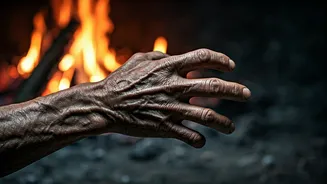
For millennia, humans have been uniquely intertwined with fire, a relationship that extends far beyond cultural advancements like cooking and tool-making.
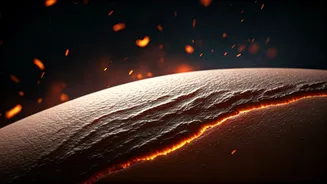
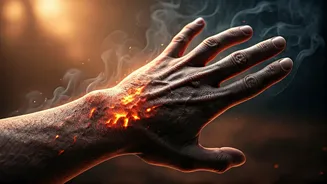
A recent scientific investigation suggests that this continuous exposure to heat, and the consequent burn injuries, has left an indelible mark on our biological makeup. While most creatures instinctively shy away from flames, our ancestors learned to harness and control fire, integrating it into their daily lives. This close proximity, however, meant that minor burns became a common occurrence, a persistent factor across generations. Researchers propose that this recurring challenge acted as a potent evolutionary pressure, subtly favouring individuals whose bodies possessed enhanced capabilities for healing and resilience against thermal damage. This prolonged and consistent interaction with fire may have been a more significant driver of human biological distinctiveness than previously acknowledged, impacting everything from cellular repair mechanisms to the body's inflammatory pathways.
Adaptations for Survival
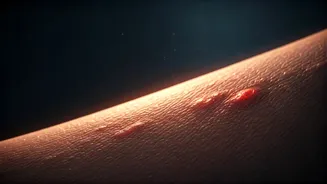
The evolutionary journey of humans, deeply connected to fire, likely favoured adaptations that facilitated recovery from burn injuries. As our ancestors became adept at managing flames, they faced repeated risks of burns, and natural selection may have promoted traits that improved survival in the face of such damage. Burns compromise the skin, our primary defence against pathogens, and prolonged breaches in this barrier elevate infection risks significantly. Consequently, the theory posits that evolutionary pressures encouraged the development of a more robust inflammatory response, swifter wound closure mechanisms, and heightened pain sensitivity. These biological enhancements would have been crucial in limiting further harm and preventing systemic infections following minor to moderate burns, thereby increasing the chances of survival and reproduction for those possessing them. This suggests that our capacity to heal from burns isn't merely a biological function but a product of ancient adaptive strategies forged in the crucible of fire.
The Double-Edged Sword
While evolutionary pressures likely favoured enhanced healing responses for minor burns, these same adaptations may present challenges with more severe injuries. The heightened inflammation and accelerated healing mechanisms that benefit smaller wounds can become detrimental when faced with extensive burns. In modern medicine, it's understood that severe thermal trauma can trigger an overwhelming inflammatory cascade, leading to extensive scarring, tissue damage, and even organ failure. The researchers behind this study theorize that these extreme reactions observed today could be the unintended consequence of ancient adaptations not designed to cope with massive injuries. This perspective suggests that our biological responses, honed over eons for everyday burns, might be ill-equipped for the scale of trauma associated with catastrophic events, offering a new lens through which to understand the complexities of severe burn treatment and recovery.
Genetic Clues Uncovered
Evidence for fire's impact on human evolution is emerging from genetic analysis, revealing distinct evolutionary trajectories in genes related to healing and inflammation. By comparing the genetic makeup of humans with that of other primates, researchers have identified several genes involved in wound repair, immune response, and inflammatory processes that show accelerated evolution in our species. These genetic differences are proposed to explain unique human skin characteristics, such as its inner layer's thickness and the deeper placement of sweat glands, which may offer a degree of protection against heat. This evolutionary viewpoint is also believed to shed light on why treatments developed from animal models have not always translated effectively to human burn patients. The varied recovery rates and complications observed among individuals also suggest a genetic component, paving the way for future research into how specific genetic variations influence burn recovery and the potential for personalized treatment strategies.