




Growth vs. Potential
India's economic landscape is often viewed through the lens of its annual Gross Domestic Product (GDP) growth rate. However, a less-discussed metric, the 'potential'
GDP growth rate, offers a different perspective. While the annual GDP growth rate indicates the rate at which the economy expands in a given year, the potential growth rate gauges how rapidly the economy can grow without sparking excessive inflation. A nation's potential growth rate should ideally be the target under normal circumstances. Exceeding this rate could elevate inflation, whereas falling short suggests underutilization of resources.
Key Influencing Factors
Several fundamental elements drive a nation's potential economic growth. Firstly, there's the capital stock, which comprises all tangible assets like roads, bridges, and machinery. These are the tools that generate growth. Secondly, the labor input plays a vital role, not just the number of workers but also their skills and capabilities. Labor law reforms, streamlined regulations, and investments in education and training can enhance workforce quality and employability. Lastly, total factor productivity (TFP), which measures the efficiency with which labor and capital are employed, is crucial. This reflects how effectively a nation utilizes its resources to generate output.
Survey's Assessment
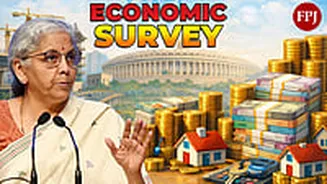
Recent economic surveys have reevaluated and increased India's projected economic growth potential from 6.5% to 7%. The survey specifically points out the impacts of reforms enacted over the past three years. These reforms encompass manufacturing-focused initiatives such as the Production-Linked Incentive (PLI) schemes, liberalized foreign direct investment (FDI), and logistical enhancements. These measures collectively boost India's production capacity, or supply side, enabling the nation to manufacture more goods and services.
Historical Context
Research from the Reserve Bank of India (RBI) reveals that India's potential growth rate has seen fluctuations over time. Between 2003 and 2008, India experienced its highest growth period, with a potential growth rate of 8%. This rate decreased to 7% between 2009 and 2015. By 2023, even the Chief Economic Advisor (CEA) acknowledged that, around the time the COVID-19 pandemic struck India, the potential growth rate had decreased to 6.5%. These historical trends highlight the dynamic nature of economic potential and its sensitivity to various internal and external factors.
Sustainability and Stability
According to international experience, sustained reforms, rather than sporadic actions, are the most reliable way to enhance potential growth. Simultaneously, the maintenance of macroeconomic stability is essential. The Economic Survey indicates that India meets both of these conditions. However, the survey also recognizes that geopolitical conflicts and their adverse consequences could impede India's ability to reach its full economic potential. Therefore, while reforms and stability are crucial, external factors can play a significant role in shaping the nation's economic trajectory.