




Shifting Political Landscape
Tamil Nadu's upcoming election, slated for April 23rd, is shaping up to be an unusual contest. While the incumbent Dravida Munnetra Kazhagam (DMK) appears
to hold a lead, a palpable sense of uncertainty pervades all major political camps, a stark contrast to the former predictability of Dravidian-led elections. This novel situation stems from the entry of actor Vijay and his party, the Tamizhaga Vettri Kazhagam (TVK), which represents a significant variable. Vijay's party, with its distinct symbol, has tapped into a substantial bloc of undecided voters distributed across the state, particularly concentrated in urban areas, among younger demographics, and in specific western and southern constituencies. Historically, state elections have been dominated by the two Dravidian parties, the DMK and AIADMK, collectively securing nearly 80% of the vote. While third fronts have existed, their influence was generally limited to a smaller segment of seats. However, this time, leaders from both major alliances anticipate that the 'spoiler effect' of new entrants could impact as many as 100 out of the 234 constituencies, potentially leading to losses for numerous candidates across the spectrum.
DMK's Confident Stance
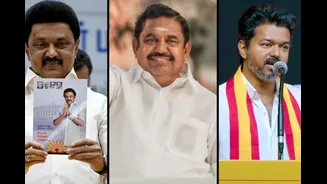
The DMK-led alliance is widely considered the front-runner for the April 23rd polls, based on various internal assessments and observed campaign strategies. Key factors contributing to this position include the government's welfare initiatives, the inherent advantages of incumbency, a fragmented opposition, and a robust statewide campaign spearheaded by Chief Minister M.K. Stalin and Deputy Chief Minister Udhayanidhi Stalin. Within the DMK, a strong sense of confidence prevails, with some internal projections suggesting a potential tally of up to 150 seats. Nevertheless, this optimism is tempered by certain concerns. Several constituencies that were previously considered safe seats for the alliance are now viewed as competitive. In regions like the Cauvery delta and the Trichy belt, specific constituencies, including Manapparai, Papanasam, and Nannilam, are generating late-stage worry within the party. Issues cited include intricate alliance arithmetic, mismatches in candidate selection, dissatisfaction stemming from seat-sharing arrangements, and less effective vote transfers from smaller coalition partners. Even in Trichy East, a constituency where Vijay is personally contesting, many within the DMK believe the seat is still recoverable. The Lalgudi constituency, featuring the wife of lottery magnate Santiago Martin, has become a three-way contest, adding to the complexity.
Allies Facing Challenges
A notable distinction is emerging between the performance of the DMK and its alliance partners, according to numerous analysts and insiders. Put plainly, even if the DMK secures strong results in its own allocated seats, its allies might not achieve similar success, and this disparity could prove significant. The Congress party, which was allotted 28 seats—three more than in the previous election—entered the campaign period with a larger share but a less impactful electoral strategy. Party officials privately acknowledge difficulties in identifying strong candidates for certain seats, struggles with achieving full local mobilization, and receiving limited national campaign support until the very end. Prominent figures like Rahul Gandhi only appeared late in the campaign, and Priyanka Gandhi Vadra did not engage in campaigning within the state, presenting less than ideal optics for a party aiming to regain relevance and win seats. Similarly, the Viduthalai Chiruthaigal Katchi (VCK), led by Thol. Thirumavalavan, is perceived to be under considerable pressure. Some within the broader alliance suggest that avoidable public discourse surrounding seat demands and candidate selection hindered the coalition's momentum. Even optimistic VCK members now consider winning four out of their eight contested seats a respectable outcome.
AIADMK's Resurgence and Questions
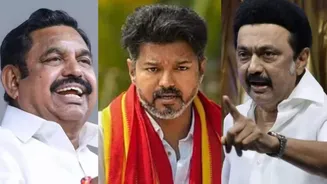
AIADMK General Secretary Edappadi K. Palaniswami has orchestrated a disciplined and extensive campaign, frequently traversing multiple districts in a single day. His alliance with the Bharatiya Janata Party (BJP) has reinfused a degree of organizational strength and broadened the AIADMK's social appeal compared to its standing in 2024. The AIADMK's primary hope rests on a straightforward premise: if anti-incumbency sentiments are strong and Vijay's TVK secures a vote share exceeding the mid-teen percentage, the negative impact will disproportionately affect the DMK, thereby creating an eleventh-hour opportunity for the AIADMK. Conversely, the DMK holds a similar viewpoint, contending that every additional vote garnered by TVK will erode the AIADMK's pool of anti-establishment voters more than it will impact the ruling alliance. This remains the central, unresolved question: who is more vulnerable to Vijay's influence? The AIADMK privately argues that TVK's appeal among urban and younger voters aligns more closely with the DMK's coalition base, especially impacting first-time voters and independent anti-establishment groups. The DMK counters that Vijay poses a greater threat to the AIADMK, as he provides a non-DMK protest option that doesn't carry the baggage associated with the BJP. Both perspectives might hold true, depending heavily on the specific dynamics of each constituency.
Chennai's Competitive Contests
The capital city, Chennai, and its surrounding areas are experiencing an intensified level of political uncertainty, characterized by an unusual number of triangular contests. Constituencies such as Anna Nagar, Villivakkam, T. Nagar, Mylapore, Royapuram, and Velachery are being closely monitored as genuine three-way battles where election margins could drastically narrow, leading to unforeseen outcomes. Perambur has emerged as the most intensely discussed electoral battleground for TVK. Political leaders across the spectrum privately acknowledge that Vijay's prospects in this constituency appear significant, potentially stronger than in some seats more commonly associated with him. Some insiders even suggest that Perambur might offer a more natural entry point for TVK's electoral success than Trichy East, the second constituency from which Vijay is contesting. Tiruvottiyur and T. Nagar are two other seats in the Chennai region where political parties suspect a late surge or upset might be brewing. R.K. Nagar, which had raised some concern for the DMK a week prior, is now assessed as relatively more secure in the final internal evaluations. This concentration of close contests in Chennai highlights the city's pivotal role in shaping the overall election results.
Beyond Chennai: Volatile Pockets
Rival political factions believe that the TVK is demonstrating strong polling performance in several other key constituencies beyond Chennai, including Gobichettipalayam, Tiruchengode, Tirunelveli, Nanguneri, and Tirupparankundram. Karaikudi is consistently being evaluated as a genuine four-cornered electoral contest, signifying a complex and multi-faceted competition. In Coimbatore, a particularly high-profile contest, reportedly involving the political sphere connected to V. Senthil Balaji, is being described by opposing parties as a '50-50' situation. This term is commonly used to indicate a scenario where all contenders perceive momentum in their favor, leading to a state of intense vigilance and sleepless nights for campaign strategists. These pockets of volatility underscore the widespread unpredictability across Tamil Nadu, suggesting that traditional strongholds may no longer guarantee predictable outcomes, and that localized factors and emerging political forces are playing a crucial role in shaping electoral dynamics.
BJP's Focused Aims
The Bharatiya Janata Party (BJP) maintains modest yet distinct electoral objectives for this election. Party leaders express confidence in credible chances of victory in specific seats, notably Nagercoil, Sattur, and Avinashi. Internal projections set a minimum 'psychological target' of securing four seats. While this number might seem small within the context of a 234-seat legislative assembly, the symbolic significance of even a few wins in Tamil Nadu politics often resonates far beyond the actual arithmetic of seats gained. The BJP's strategy appears focused on consolidating its presence and making targeted gains in constituencies where it has a discernible advantage, aiming to build momentum for future electoral cycles. Their approach signifies a calculated effort to establish a foothold and increase their political influence in a state where they have historically faced challenges, demonstrating a commitment to long-term growth rather than solely focusing on immediate, large-scale victories.
Vijay's Potential Impact
The most unpredictable factor in this election is the vote share that the Tamizhaga Vettri Kazhagam (TVK) ultimately secures. Initial assessments by rival camps estimated the TVK's vote share at around 15-17%, but current discussions place this figure closer to 20%. If this higher projection proves accurate, it will fundamentally alter the political landscape of Tamil Nadu, regardless of the number of seats the TVK wins. Achieving a tally of four seats with a 20% vote share would significantly challenge the established dominance of both major Dravidian parties. Such an outcome would signal the emergence of a new political contender for the opposition space and establish the TVK as a future bargaining force in state politics. This potential for significant disruption is precisely why, even with the DMK appearing to hold an advantage, a pervasive sense of unease exists among all parties. Tamil Nadu may well see a familiar winner crowned, but this election is undeniably setting the stage for an unfamiliar, and potentially enduring, political narrative.