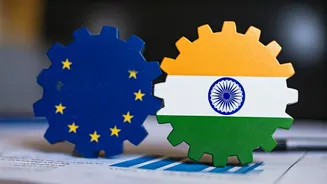










A Groundbreaking Agreement
The culmination of two decades of persistent negotiations, India and the European Union have reached a landmark trade agreement. This was described as the 'mother
of all' trade deals. This agreement signifies a pivotal moment in the economic relationship between India and the EU. This deal is designed to be a ‘living agreement’ that will adapt and evolve through regular reviews. The agreement's impact will be profound, enhancing market access for both parties and setting the stage for substantial economic growth. The details of the agreement encompass a broad scope, from tariff reductions on a wide range of goods to expanded market access for specific sectors. This is a crucial step towards deeper economic integration and cooperation between India and the EU.
Boosting Trade Dynamics
One of the primary benefits of the India-EU trade deal is the significant reduction in tariffs and the expansion of market access. India is now set to gain access to the EU market for over 99% of its exports. Furthermore, the agreement includes substantial tariff reductions on approximately 96% of goods. This opens up unprecedented opportunities for Indian exporters across various industries. The agreement's impact is expected to be immediate and far-reaching, with exports projected to double in the coming years. This surge in exports will fuel economic growth and create more jobs. This agreement also includes specific provisions for strategic sectors. For example, India is offering EU automakers a quota that is six times larger than the UK's and is lowering car tariffs. This provides a significant advantage for EU automakers and increases competition.
Energy Sector Opportunities
The trade agreement between India and the EU also presents substantial opportunities for the energy sector. According to Prime Minister Modi, the agreement offers a $500 billion opportunity within the energy sector. This suggests a significant potential for increased trade and investment in the energy domain. Both parties have shown a commitment to enhancing their collaboration in the energy sector. For instance, discussions include collaboration for oil and petroleum trade, indicating a strong focus on energy security and sustainability. This partnership could involve joint projects, technology transfers, and investments to facilitate the transition to cleaner energy sources. The focus on energy highlights the strategic importance of this sector and its potential for mutual growth.
Long-Term Implications
The India-EU trade agreement is not just a short-term economic boost, but also a long-term strategic partnership. The agreement is designed as a 'living agreement,' which will evolve over time through multiple review mechanisms. This ensures that the agreement remains relevant and adaptable to changing economic conditions and priorities. The long-term implications are substantial, with both parties poised to benefit from increased trade, investment, and economic growth. This agreement could lead to more robust trade relationships, opening new markets and creating employment opportunities. The agreement also includes provisions for addressing any emerging challenges or disputes, ensuring the long-term sustainability and effectiveness of the partnership. This agreement sets the stage for even closer ties between India and the EU, supporting shared economic growth and cooperation.