






Legal Challenge Fails
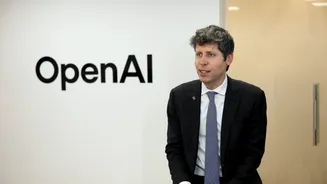
A California federal jury has delivered a unanimous verdict, siding with OpenAI and its CEO Sam Altman in the lawsuit brought forth by Elon Musk. The core
of Musk's legal argument centered on his assertion that OpenAI had strayed from its foundational non-profit mission to benefit humanity, particularly after his initial $38 million donation. He accused Altman of orchestrating a shift towards a for-profit model, which he believed violated the original charter. However, the jury ultimately determined that OpenAI was not liable for these claims. This decision signifies a significant legal setback for Musk in his efforts to reclaim or influence the direction of the artificial intelligence powerhouse he co-founded.
Statute of Limitations
The pivotal factor in the jury's decision was the finding that Elon Musk filed his lawsuit too late. The nine-person jury concluded that the legal timeframe, known as the statute of limitations, had expired, rendering his claims invalid. While the trial proceedings involved 11 days of arguments and testimony that scrutinized the credibility of both Musk and Altman, the ultimate resolution rested on this procedural ground. The jury's unanimous agreement on this point meant that the merits of Musk's accusations regarding the mission shift and his financial contribution did not need to be deeply adjudicated. This legal technicality effectively ended Musk's challenge before it could delve into the substance of his allegations about the AI company's for-profit transformation.
OpenAI's Defense
During the legal proceedings, OpenAI and Sam Altman presented a strong defense, arguing that the company was never intended to remain a non-profit entity indefinitely. They contended that Musk was aware of this evolving business model and that his lawsuit was partly motivated by his inability to maintain unilateral control over the company. With OpenAI now valued at over $850 billion, its transformation into a profit-driven enterprise was a natural progression, according to its leadership. The defense also highlighted that Musk's departure from the company in 2018, after co-founding it in 2015, stemmed from disagreements over control, further supporting their stance that his current legal actions were aimed at regaining influence rather than preserving an original non-profit ideal.