






A Welcoming Tradition
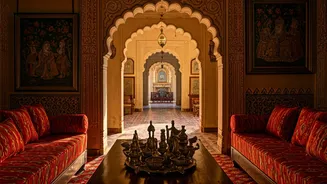
The entrance to Rajasthan's Deputy Chief Minister Diya Kumari's Jaipur residence immediately immerses visitors in the profound spirit of Rajasthani hospitality.
This isn't merely a greeting; it's a cultural embodiment of 'atithi devo bhava,' where guests are revered as divine. This foundational principle sets the tone for the entire home, influencing everything from the artworks displayed to the very atmosphere of the space. The residence itself, while an official allocation, has been meticulously layered with elements that speak volumes of Rajasthan's artistic legacy and Kumari’s personal connection to her roots. According to psychologist Neha Cadabam, such environments, rich in cultural markers, significantly shape self-perception and offer a powerful sense of emotional anchoring and belonging. The deliberate integration of heritage serves as a constant reinforcement of identity, transforming a functional space into a repository of memory and cultural pride.
Walls of History
The walls within Diya Kumari’s Jaipur residence serve as a visual narrative of Rajasthan's glorious past. Prominently featured is a painting of Amber Fort, a site deeply significant to her lineage and the region’s history, representing a capital before Jaipur’s establishment. This artwork, and others like it, transcend mere decoration; they are portals to a rich historical tapestry. Kumari eloquently references the state’s iconic forts—Kumbhalgarh, Chittorgarh, and Jaisalmer—each narrating distinct chapters of Rajasthan’s storied existence. She highlights that Kumbhalgarh Fort boasts one of the world's longest walls, a testament to historical engineering and defense. For a public figure representing diverse constituencies, this deep connection between the landscape and individual identity is paramount. As psychologist Cadabam notes, these cultural symbols foster pride by connecting individuals to a larger narrative, reinforcing self-identity and emotional stability through a sense of continuity with ancestral traditions and collective values.
Personal Touches
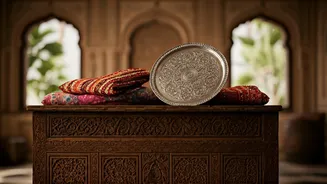
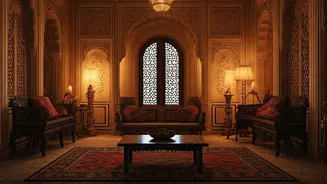
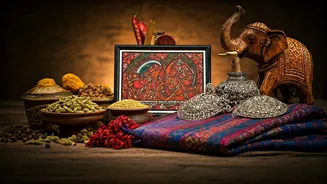
Despite its status as an official government residence, Diya Kumari has imbued her Jaipur home with a profoundly personal aesthetic, championing local craftsmanship at every turn. She actively curated the space, introducing elements that were not part of the original allocation, such as the numerous paintings that now adorn the walls. The living areas are thoughtfully appointed with cushions featuring traditional Sanganeri prints, intricate displays of blue pottery—a craft for which Jaipur is world-renowned—and carefully framed miniature paintings, another celebrated Rajasthani art form. Kumari’s commitment to showcasing local artisans is evident in her selection of decorative items. A particularly striking piece is a blue pottery depiction of Srinathji, which elegantly marries devotional art with the city’s distinctive ceramic tradition, exemplifying the seamless integration of cultural pride and personal taste within the official dwelling.
Spiritual Connections
The artwork within Diya Kumari's residence extends beyond the borders of Rajasthan, reflecting a broader spiritual and historical connection. A serene painting of the ghats of Varanasi, hanging in a quiet corner, holds particular significance. This connection stems from her family’s historical ties to the city, notably through Raja Man Singh's contributions, including the construction of Man Ghat and support for the Kashi Vishwanath Temple. Kumari finds this painting deeply beautiful and spiritual, describing it as a place where she finds peace and can sit and work in the morning. This artwork transforms the space into more than just a decorative element; it becomes a contemplative sanctuary amidst the demands of public life, offering a moment of quiet reflection and spiritual solace within her home.
The Office Sanctuary
While the entire residence exudes charm and heritage, Diya Kumari identifies her office as her most cherished space. This choice, though perhaps seemingly practical, underscores a deep psychological need for a personal sanctuary. For a public figure juggling myriad responsibilities, this room serves as both a productive workspace and a haven of tranquility. Psychologist Neha Cadabam explains that such dedicated personal corners offer psychological safety and a sense of control, essential for emotional balance. These areas, designated for quiet reflection or focused work, become restorative zones. The brain associates these environments with calmness and productivity, enabling individuals to maintain emotional equilibrium while still engaging in social aspects of home life, proving that even the most official residences can nurture profound personal well-being.
Souvenirs of Journeys
Another light-filled room in Diya Kumari's Jaipur home showcases a collection of art pieces, some sourced from within India and others acquired during her international travels. This practice of collecting art from new places extends beyond personal mementos; it reflects a significant belief in supporting global artisans and their crafts. Kumari views each acquisition as an opportunity to provide much-needed reach for talented artists whose beautiful creations deserve wider recognition. By integrating these pieces into her home, she transforms her residence into a quiet gallery that celebrates diverse craft traditions, demonstrating how personal spaces can become platforms for cultural appreciation and economic support for artisans worldwide.
Courtyard Light
The architectural design of the residence thoughtfully incorporates an open courtyard, a feature characteristic of traditional Indian homes, which bathes the surrounding rooms in abundant natural light. Diya Kumari expresses her deep affection for this element, describing the space as 'very nice and light and airy.' This integration of natural light and open spaces connects the home to the rhythms of older Indian dwellings, where design was intrinsically linked to climate and daily living. Psychologically, such courtyards and bright, airy rooms act as vital mental reset zones. As Cadabam explains, these spaces allow individuals to temporarily step away from social roles and external pressures, offering essential moments of solitude that are crucial for emotional regulation, mental clarity, and preventing cognitive overload from constant stimulation.
Heirlooms of Time
Beyond the decorative arts and interior design, Diya Kumari's personal wardrobe also narrates a story of inherited history and enduring legacy. Her extensive collection of sarees is a testament to this, with many pieces holding profound emotional significance. She shares that she has inherited numerous sarees from her grandmother and mother, preserving their memories within these cherished garments. Additionally, gifts of sarees received over time, and her own fondness for acquiring unique pieces during her travels, further enrich this collection. Each saree, therefore, represents not just a piece of clothing but a tangible connection to past generations and a captured moment from her own life experiences, embodying a deep respect for heritage that extends into her personal style.