





Sea Otters' Aggression
While sea otters are widely adored for their hand-holding while floating and their clever use of tools to open shellfish, their amiable appearance belies
a more aggressive nature, particularly among males. These marine mammals have been observed engaging in forceful mating practices, which can include biting females around their faces and persistently harassing them. In rare and alarming instances, male sea otters have even been documented attacking young seals, highlighting a predatory and territorial aggression that contrasts sharply with their popular image.
Koalas' Roaring Secret
Koalas spend most of their lives in a state of serene slumber, dozing for 18 to 22 hours a day amidst eucalyptus trees, which lends them a remarkably plush-toy-like demeanor. This peaceful image, however, is dramatically challenged during the mating season. Male koalas unleash deep, resonant bellows that act as a signal of their size and dominance to rivals. This vocal display is often accompanied by aggressive pursuits of other males, revealing a combative and territorial side that is far removed from their generally tranquil appearance.
Dolphins' Bullying Tendencies
Dolphins consistently rank high on lists of friendly and intelligent animals, often engaging in playful interactions with humans and performing impressive feats. However, beneath this charming exterior, they exhibit significant bullying behaviors. This aggression is not only directed towards their prey, such as seals and other pinnipeds, which they may toss around, but also towards other species. They have been known to violently confront other animals and, disturbingly, have been observed killing porpoises and even young dolphins. These actions are often attributed to the complex social hierarchies and competitive dynamics within dolphin pods.
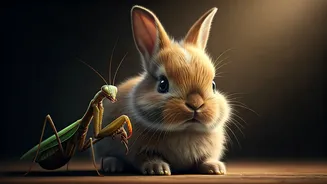
Praying Mantis Cannibalism
The praying mantis, with its seemingly tranquil posture and delicate, swaying movements, presents an image of serene stillness. Yet, a starkly contrasting aspect of its life cycle is the phenomenon of sexual cannibalism. Female praying mantises frequently consume the males during or immediately after the mating process. This behavior, while unsettling, is a vital evolutionary adaptation that provides the female with essential nutrients necessary for producing her eggs, particularly if she is already experiencing a deficiency. This practice, though an efficient survival strategy, is undeniably eerie.
Cats' Disturbing Gifts
For many cat owners, the habit of their feline companions bringing home 'gifts' is a well-known, if sometimes unsettling, aspect of their pet's affection. Domestic cats often express their bond and instincts by presenting their owners with prey, which might still be alive or only partially subdued. This behavior stems directly from their innate hunting instincts and serves a dual purpose: it's a way of sharing their 'catch,' reinforcing their territory, and demonstrating their provider role within the household, albeit in a manner that can be quite jarring for humans.
Anglerfish's Parasitic Union
In the deep, dark abyss where anglerfish reside, a peculiar and extreme reproductive strategy unfolds. Some species of anglerfish have evolved a bizarre symbiotic relationship. The significantly smaller male anglerfish finds a female and bites onto her body, permanently fusing with her. He then effectively becomes a parasitic organ, providing a constant supply of sperm. The female anglerfish may carry multiple such fused males, a remarkable adaptation that ensures reproductive success in the challenging environment of the deep sea.
Koala Gut Training
Beyond their sleepy demeanor and the surprising roars of males, koalas possess another fascinatingly odd survival mechanism related to their diet. To effectively digest the tough, fibrous eucalyptus leaves, koalas must develop a specialized digestive system. This process begins early in life, where young koalas consume a specific form of their mother's feces directly from her anus. This 'cecotrope' is rich in the necessary gut microbes, essentially inoculating the offspring's digestive tract and preparing it to process the challenging eucalyptus diet, a crucial step for their survival.