






Understanding Brake Fading
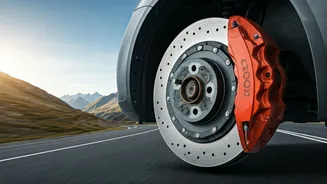
Brake fading is a perilous phenomenon that occurs when brakes lose their effectiveness due to overheating, a common hazard on steep gradients. This critical
issue arises from prolonged and excessive application of the brakes, causing the brake liners to reach excessively high temperatures. When this happens, the friction generated between the brake components significantly diminishes, leading to a dangerous reduction in stopping power. The primary method to avert this dangerous scenario is to consciously minimize the need for constant, hard braking. By anticipating downhill stretches and adopting a proactive approach to speed management, drivers can drastically reduce the strain on their braking systems, thereby preserving their efficacy and ensuring a safer descent. It's about managing momentum rather than solely relying on friction to slow down.
Strategic Gear Selection
A fundamental technique for safe mountain driving involves using engine resistance to control speed, a principle often overlooked by drivers accustomed to flatter terrains. The key is to descend using the same gear that would have been employed for climbing the same incline. For instance, if you used third gear to ascend a hill, you should aim to use third gear for the descent. This allows the engine's inherent resistance to act as a natural brake, significantly reducing the reliance on your foot brakes. By engaging a lower gear, the engine works to slow the vehicle, providing a more controlled and gradual deceleration. The clutch should only be engaged after the vehicle has already achieved a reduced speed through engine braking, preventing abrupt stops and maintaining consistent control throughout the descent.
Driver Awareness and Adaptation
Navigating hilly regions demands a distinct driving approach compared to city streets or open highways. Many accidents stem from drivers attempting to replicate their familiar top-gear driving habits in mountainous environments. While short straightaways between hairpin turns might tempt acceleration, followed by sharp braking at each bend, this pattern is inefficient and risky on continuously winding roads. This stop-and-go braking action exacerbates the problem of brake fading, as the brakes are repeatedly subjected to intense heat. Adapting to the unique challenges of hill driving, including the sharp turns and varying gradients, requires constant vigilance and a willingness to adjust driving style, prioritizing controlled deceleration over aggressive acceleration.
Vehicle Factors and Modifications
Beyond driving techniques, certain vehicle characteristics and modifications can heighten the risk of accidents on slopes. Specifically, certain vehicle models, like the mini-buses frequently seen in some regions, have exhibited a propensity for brake fading issues. While manufacturers may introduce modifications to their braking systems in response to such concerns, it's crucial to acknowledge that alterations affecting a vehicle's weight distribution can also compromise safety. Installing accessories such as air conditioning units, particularly in smaller vehicles, can shift the balance and increase the stress on the braking system, potentially leading to hazardous situations, especially on inclines where control is paramount.
Essential Precautions for Drivers
Driving on mountain roads necessitates a heightened sense of awareness and adherence to specific safety protocols. Visibility can be significantly impaired by fog, sharp curves, and steep descents, making it difficult to gauge the road ahead. Unlike highways, hilly terrains often lack shoulders where one can safely pull over in an emergency. It is imperative to reduce speed considerably before entering bends and avoid sudden braking maneuvers. Overtaking on curves is strictly prohibited due to the unpredictable nature of oncoming traffic and blind spots. Furthermore, drivers should never descend in neutral, as this negates engine braking and relies entirely on the foot brakes, increasing the risk of overheating. Taking regular breaks if fatigued and yielding to uphill traffic are also vital practices for maintaining safety.