
FTA: Game Changer
The India-EU Free Trade Agreement (FTA) is poised to significantly impact India's gem and jewellery industry. This pact is designed to turbocharge market
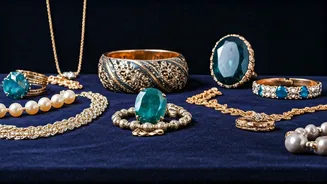
diversification, with an ambitious goal of doubling bilateral trade to $10 billion (₹91,000 crore) within a mere three years. The agreement's cornerstone is zero-duty access to the European Union, a market of elite buyers, and also the largest consumer market globally. This preferential access will empower key export hubs across India, particularly in Gujarat, Rajasthan, Maharashtra, and West Bengal, to ramp up their exports of precious and studded jewellery, silver, and imitation jewellery. The FTA will allow India to capitalise on its renowned design capabilities. This move comes at a crucial time, especially with a 44 per cent decline in exports to the USA, making this FTA a lifeline for Indian exporters to regain lost ground in the international market. The Gem & Jewellery Export Promotion Council (GJEPC) has lauded this initiative, pointing out that duties of 2-4 per cent on precious jewellery will be eliminated, thus unleashing immense export potential within the 27-member EU bloc.
Market Dynamics Unveiled
In the fiscal year 2024, India's exports of gems and jewellery reached $30 billion, demonstrating the sector's significant contribution to the national economy. Bilateral trade with the EU totaled $5.2 billion, with exports reaching $2.7 billion (8.92 per cent of the total) and imports valued at $2.5 billion, according to the GJEPC. The FTA has brought substantial relief to exporters, who see it as a pivotal step in expanding their global reach. The pact effectively opens up the world's second-largest market and puts them on par with countries like China and Thailand, which already enjoy zero tariffs on their shipments to Europe. Kirit Bhansali, Chairman of the GJEPC, expressed gratitude to Prime Minister Narendra Modi and Commerce & Industry Minister Piyush Goyal for securing the FTA, calling it the “mother of all trade deals.” This agreement is not just a trade deal; it's a strategic move to boost the gem and jewellery sector's competitiveness, opening up 27 countries to the sector.
Boosting Indian Economy
The FTA's positive ripple effects extend beyond market access. Pramod Agrawal, Chairman of the National Gems and Jewellery Council of India, highlighted that the agreement is expected to fuel trade growth between India and EU members. This expansion will, in turn, drive increased manufacturing of gems and jewellery within India, generating more employment opportunities and leading to further economic expansion. The FTA addresses a crucial competitive disadvantage faced by Indian exporters. Previously, they competed with China and Thailand, which already benefited from zero tariffs. With the FTA, the Indian gem and jewellery industry gains a significant edge, particularly in light of existing tariffs imposed by the United States. Furthermore, the EU's jewellery imports from India were limited at $628 million, of which $573 million was precious jewellery and $55 million was fashion (imitation) jewellery. These imports previously attracted 2-4 per cent duties, thereby creating a market dominated by competitors who had a tariff advantage. This agreement promises to reshape the trade landscape, fostering growth and strengthening India's position in the global gem and jewellery market.