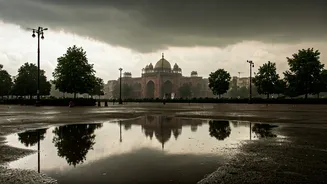

Temperature Plunge Observed
The arrival of rain in Delhi brought a noticeable decrease in temperature. Weather reports indicated that the temperature dropped by more than 6°C due
to the rainfall. This dramatic shift was a welcome change for Delhi residents, who had been enduring high temperatures. The sudden cooling provided temporary relief from the hot weather conditions that had persisted before the rain. The change in temperature was immediate and significant, offering a break from the heatwave experienced in the city. The temperature reduction was one of the most prominent immediate effects of the rainfall, as people could immediately feel the weather change.
Air Quality Unchanged
Even though the rain brought cooler temperatures, it did not significantly improve Delhi's air quality. Despite hopes that the rain would wash away pollutants, the air remained heavily polluted. The air quality index, a measure of air pollution, did not reflect any substantial improvements following the rainfall. This lack of change suggests that the rain was not effective in clearing the air of pollutants. The incident highlighted the persistent air quality issue the city faces. The city's air pollution continued to pose a health risk, irrespective of the cooler weather. This issue underscores the need for sustainable solutions to combat air pollution.
Short-Term Relief Only
The reduction in temperature offered only temporary relief to Delhi residents. While the immediate impact of the rain was a pleasant cooling effect, it was not expected to last long. The weather conditions were anticipated to return to their normal state. This meant the heat would likely return in the coming days. The city's weather is susceptible to rapid changes. The temporary respite underscored the fact that the root causes of Delhi's weather patterns still persisted. The lack of a long-term change highlighted the need for more lasting measures to influence the weather conditions.
Looking Ahead at Solutions
Addressing the persistent air quality issues requires comprehensive and sustainable strategies. The immediate impact of the rain on temperature showed some improvement but it failed to improve the air quality of the city. Implementing measures to control pollution at its sources is essential. This could involve stricter emission standards and policies. Further steps include encouraging the adoption of cleaner technologies. Investing in public transportation and promoting the use of electric vehicles can also greatly help. Furthermore, increasing green spaces within the city would also play a crucial role. These combined efforts are needed to create long-term improvements in the city's environment. The key is to implement various strategies concurrently.