







Automated Herd Movement
Gone are the days of early morning wake-up calls and laborious herding. A groundbreaking approach is redefining dairy farm management, allowing farmers
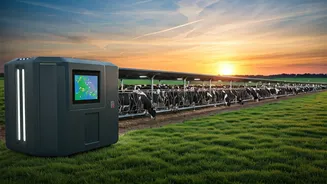
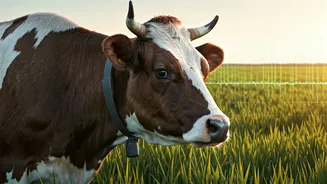
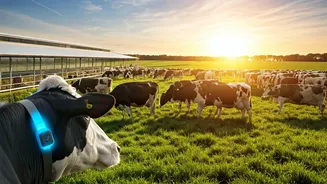
to orchestrate the movement of up to 600,000 cows with a mere touch on their smartphone. This innovative system replaces traditional methods like dogs and fences with sophisticated wearable devices. Each cow is equipped with a smart collar that, when activated by a single command, gently guides the entire herd towards designated areas, such as milking stations. This technology not only saves precious time but also eliminates the need for constant human supervision and the significant costs associated with physical fencing, which can range from $15,000 to $40,000 per mile and require ongoing maintenance. The efficiency gains are substantial, fundamentally altering the daily operations of a modern farm.
Virtual Fencing Explained
The core of this revolutionary farm management lies in its sophisticated virtual fencing capabilities. Farmers utilize a user-friendly mobile application to define boundaries on a satellite view of their land, much like drawing a shape on a map. These digital perimeters are instantly transmitted as precise GPS coordinates to every cow's collar, eliminating the necessity for any physical barriers. Each collar constantly tracks the animal's location, making real-time adjustments. When a cow approaches the virtual boundary, her collar emits a gentle, directional sound. Cows are trained through behavioral science to associate this sound with the need to turn away from the boundary. This automated process ensures cows remain within their designated areas without human intervention, proving to be an exceptionally effective and adaptable solution compared to conventional fencing.
Behavioral Science Mastery
The true ingenuity of this system is rooted not in advanced computing alone, but in a deep understanding of animal behavior and applied behavioral science. During an initial onboarding period, typically spanning a week, farmers work alongside their cows. The collars emit audible cues, and as the cows learn to associate the sound with moving in the correct direction, the sound ceases. This positive reinforcement quickly establishes the desired association. As the cows adapt, the need for physical guidance diminishes, and they learn to respond autonomously to the algorithm. Being naturally gregarious creatures, once a portion of the herd begins to move, the rest instinctively follow, creating a collective learning dynamic that significantly accelerates the training process for hundreds of animals within days.
Advanced Cowgorithm Monitoring
Beyond its groundbreaking guidance capabilities, the smart collar serves as a comprehensive health and behavior monitoring device. It continuously gathers critical data points for each individual animal, including their chewing habits, body temperature, movement patterns, rest cycles, and even subtle indicators of fertility. This wealth of information is processed by the 'Cowgorithm,' an artificial intelligence trained on extensive datasets from hundreds of thousands of cows over several years. The AI establishes a baseline for normal behavior for every cow and can detect deviations that might signify illness, often 24 to 48 hours before visible symptoms manifest. Early detection drastically improves treatment outcomes and reduces costs. Furthermore, the system accurately identifies a cow's limited fertility window, alerting farmers at the optimal time to maximize breeding success and optimize herd reproduction.
Economic Impact & Growth
The adoption of this AI-driven farming technology has yielded remarkable economic benefits. Users have established over 11,000 miles of virtual fencing, equating to substantial savings estimated at $220 million in conventional fencing expenditures. The system is actively managing herds totaling over 700,000 cattle across New Zealand, Australia, and 22 states in the US. The company operates on a recurring revenue model, with subscription fees ranging from $5 to $8 per cow monthly, with collars being leased. For instance, a farm with 500 cows might incur a monthly cost of approximately $3,000, with larger operations incurring proportionally higher fees. Once operations are integrated with this digital infrastructure, transitioning away becomes a complex undertaking due to the system's integral role.
Visionary Investment & Future
The significant potential of this innovative agricultural technology has attracted substantial investment, including a notable $2 billion valuation led by Peter Thiel's Founders Fund. This investment signifies a long-term commitment, as the fund has supported the company since its early development stages in 2018. The $2 billion valuation underscores a strong confidence in the technology's capacity to revolutionize farming and its broader applications. This AI-driven approach to coordinating large groups of animals in real-time, using data, sensors, and behavioral cues, transcends agriculture. It holds promise for applications in wildlife management, logistical coordination, and advanced robotics, representing a paradigm shift in how physical environments can be managed through sophisticated software systems and reduced manual labor.