






AI Talent Exodus
Despite Meta's considerable investment in advancing artificial general intelligence and appointing seasoned leaders like former Scale AI chief Alexandr
Wang and ex-GitHub CEO Nat Friedman, the company's Superintelligence Labs (MSL) has recently witnessed a series of departures among its top personnel. This exodus is particularly concerning given the high salaries offered to attract these individuals. For instance, Ruoming Pang, who previously led foundation models at Apple Inc. before joining Meta, has now moved to OpenAI. This trend of experienced researchers leaving for rival firms underscores the fierce competition for elite AI talent in the industry, suggesting that even substantial financial packages may not be enough to stem the tide of departures.
Key Departures & Timing
The migration of AI talent from Meta isn't a new phenomenon, with notable exits occurring as far back as 2025. Avi Verma and Ethan Knight, individuals with prior associations with OpenAI, were among the first to leave MSL. In the subsequent year, Bert Maher, a long-time Meta employee of 12 years who played a crucial role in developing PyTorch, a widely adopted open-source platform for AI model training, also departed. Adding to this list are Chaya Nayak and Afroz Mohiuddin, who had dedicated nine and 14 years respectively to Meta, both making the move to OpenAI in 2025. These consistent departures highlight an ongoing challenge for Meta in retaining its most valuable AI researchers and developers.
Incentives and Strategy
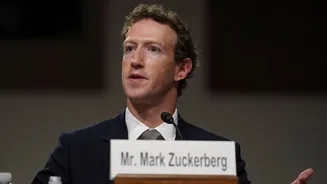
In response to this significant attrition, Meta is reportedly implementing a new strategy involving stock options specifically for its key leaders. This initiative aims to bolster talent retention, particularly at the executive level. Filings with the U.S. Securities and Exchange Commission (SEC) have revealed the names of several high-ranking executives included in this incentive plan, such as CFO Susan Li, technology chief Andrew Bosworth, Chief Product Officer Christopher Cox, and operating chief Javier Olivan. Notably, CEO Mark Zuckerberg himself is not part of this stock option program. This move signals Meta's increased focus on retaining its senior leadership amidst the intense competitive landscape in AI development.
Competitive Pressures
This strategic pivot by Meta to offer stock options to retain executives arrives at a critical juncture, as the social media giant faces escalating pressure to enhance its artificial intelligence capabilities. Competitors like OpenAI, Anthropic, and Google have already made significant strides, launching popular and influential AI models and features that have captured public attention and market share. The urgent need for Meta to catch up and innovate in this rapidly evolving field is evident, making the retention of its top AI minds and leadership absolutely paramount to achieving its ambitious goals and staying competitive.
Conditional Compensation
A spokesperson for Meta has characterized these new executive pay packages as a substantial commitment, stating, "This is a big bet." Crucially, the company has made it unequivocally clear that these lucrative compensation packages are contingent upon Meta achieving significant future success. The realization of these stock options is directly tied to the company's ability to deliver massive gains and benefits for all its shareholders. This conditional approach underscores Meta's confidence in its long-term AI vision while simultaneously placing a high bar for executive performance and company-wide achievement.