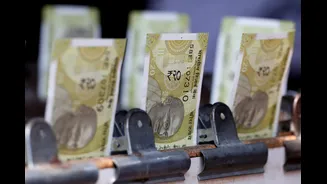

Record Low Value
The value of the Indian rupee has plummeted to an unprecedented low, trading at 92 against the US dollar. This marked a significant milestone, raising
concerns among economists and financial analysts. Several economic factors contributed to this unfortunate depreciation. The rupee's weakness has been attributed to a confluence of both domestic and global market dynamics. International investors may have reduced their holdings in Indian assets as a result of rising interest rates in the US, thereby triggering a decrease in demand for the rupee. Furthermore, a wider trade deficit, fueled by rising import prices and fluctuating export revenue, could have pressured the Indian currency to lower levels. These events have created challenges for India's economy.
RBI's Intervention
In response to the rupee's sharp decline, the Reserve Bank of India (RBI) took action, stepping in with measures aimed at stabilizing the currency and mitigating the adverse impacts of its depreciation. As the country's central bank, the RBI is entrusted with the responsibility of maintaining financial stability. The RBI usually intervenes in the foreign exchange market by selling dollars in an effort to boost demand for the rupee and curb its decline. Moreover, the RBI may consider other policies, such as adjusting interest rates or changing reserve requirements, to impact market sentiments and stabilize the currency. The RBI's prompt and decisive actions aim to instill confidence in the market and alleviate the strain on the economy, and its actions will be carefully watched.
Economic Implications
The rupee's depreciation to a record low has wide-ranging consequences for the Indian economy, which will be felt across several sectors. A weaker rupee has both positive and negative ramifications. The country's export competitiveness might improve, making Indian products cheaper for international buyers, which could boost exports. However, a falling rupee raises the cost of imports, including essential commodities like crude oil and capital goods, thus increasing inflationary pressures. This could make it more expensive for businesses and consumers, affecting purchasing power. Furthermore, concerns arise regarding debt repayment, particularly for companies with foreign-currency-denominated debt. These companies could experience higher repayment costs due to the weaker rupee. Therefore, the implications of the rupee's decline are multifaceted.