





The Cosmic Phenomenon Explained
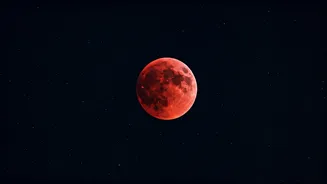
A lunar eclipse is a stunning astronomical display occurring when Earth positions itself directly between the Sun and the Moon, casting its shadow upon
our lunar companion. This alignment causes the Moon to darken, and sometimes, to take on a captivating reddish hue often referred to as a 'Blood Moon.' This striking color is a result of Rayleigh scattering in Earth's atmosphere, where shorter blue light waves are dispersed, allowing longer red and orange wavelengths to bend around our planet and illuminate the Moon. Essentially, we are observing a projection of all the world's sunrises and sunsets onto the lunar surface simultaneously. Scientifically, an eclipse is a natural event, devoid of inherent inauspiciousness. However, many spiritual traditions view these periods as potent times for introspection, prayer, and inner purification, offering a pause for emotional and mental reset.
Astrology and Emotional Resonance
In astrological terms, the Moon governs our minds, emotions, stability, and maternal energies. During a lunar eclipse, the Moon is believed to enter a phase of temporary weakness as it's enveloped by Earth's shadow. This symbolic 'dimming' can amplify emotional sensitivity, potentially leading to confusion, mood fluctuations, or a sense of restlessness, particularly for individuals whose birth charts are strongly influenced by lunar energies. To mitigate these effects, astrological practices often suggest specific remedies and precautions during the eclipse period, aiming to promote balance and inner harmony amidst these heightened emotional tides.
Navigating Sutak Kaal and Do's
Sutak Kaal, an inauspicious period preceding and during an eclipse, is observed in Hindu tradition. For the March 3, 2026 Lunar Eclipse, Sutak Kaal will be valid in regions where the eclipse is visible, adhering to Indian Standard Time (IST). It begins nine hours before the lunar eclipse. During Sutak Kaal, it is advisable to avoid temple visits, cooking, and initiating auspicious activities. Conversely, the eclipse period offers opportunities for spiritual practices. Recommended 'Do's' include chanting mantras like the Mahamrityunjaya Mantra or Hanuman Chalisa for protection, engaging in meditation and prayer to harness positive energies, and performing acts of charity. After the eclipse concludes, bathing and cleansing one's living space and altar are encouraged to purify the aura.
Eclipse Visibility and Precautions
The Total Lunar Eclipse on March 3, 2026, is expected to be visible across India, with regional variations in observation. Eastern and northeastern parts may experience the total phase, while most other regions might witness the partial phase, and western India could observe only the penumbral stage. Sutak Kaal's validity is linked to eclipse visibility. Pregnant women are traditionally advised to stay indoors and chant mantras, although scientifically, eclipses pose no harm. The eclipse will last approximately 57 minutes and 27 seconds for the total phase, with partial and penumbral phases extending longer. Importantly, lunar eclipses are safe to view with the naked eye; no special protective eyewear is necessary, unlike with solar eclipses. Telescopes can enhance viewing details, and online livestreams are available if direct observation is obstructed.
Holi & Eclipse: A Rare Confluence
The year 2026 presents a rare cosmic alignment as the vibrant festival of Holi falls on the same day as the Lunar Eclipse, March 3rd. Holi celebrates devotion and the triumph of good over evil, symbolizing purification through fire (Holika Dahan). The lunar eclipse, conversely, is associated with introspection and spiritual caution due to heightened lunar energies. This overlap creates a powerful duality: a celebration of joy and color juxtaposed with a call for mindful awareness and spiritual practice. The rarity stems from Holi occurring on Phalguna Purnima (the full moon) and lunar eclipses also happening only on full moons, a precise alignment that is infrequent.
Harmonizing Traditions and Celestial Events
When Holi and a lunar eclipse coincide, it offers a profound opportunity for a dual layer of cleansing. Holika Dahan, symbolizing the burning of negativity, can be performed with the intention of clearing inner obstacles, while the eclipse hours can be dedicated to mantra chanting and meditation. Instead of viewing it as a conflict, this confluence can be interpreted as a cosmic prompt for both outward celebration and inward purification. If the eclipse timing overlaps with Holika Dahan, rituals should ideally be completed before Sutak Kaal begins. This might involve adjusting the timing of the bonfire to ensure spiritual alignment, followed by celebrating Rangwali Holi the subsequent day after Sutak concludes.
Astrological Aids for Balance
Certain astrological tools are believed to help mitigate the potential negative impacts of a lunar eclipse and foster a sense of calm and stability. Wearing a Moonstone bracelet or pendant is thought to soothe the mind and promote emotional equilibrium during this period of heightened lunar energy. The 5 Mukhi Rudraksha is considered a protective bead that can help reduce the influence of negative waves and strengthen mental fortitude and spiritual resilience. Incorporating a Karungali bead Mala into mantra chanting during the eclipse is also suggested to enhance meditation focus and ward off adverse energies, contributing to a more balanced and spiritually aligned experience.
Effective Remedies for Well-being
To navigate the energies of the lunar eclipse with greater ease and reduce potential stress, several remedies are recommended. Engaging in the chanting of the mantra 'Om Namah Shivaya' 108 times is a powerful practice for spiritual connection. Acts of charity, such as donating white items like rice or milk to the needy, and feeding stray animals, are believed to generate positive karma. Post-eclipse, taking a bath with rock salt can help cleanse the aura, and lighting a diya (lamp) with sesame oil during the eclipse hours is a traditional practice to invoke protective energies and support mental clarity through guided meditation.