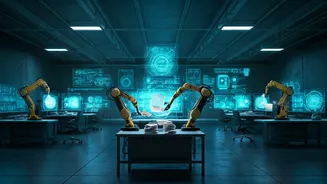

The AI Revolution
The rapid progress in Artificial Intelligence has naturally ignited debates concerning its ramifications on the employment scene. The popular worry is
that advanced AI systems will automate and eventually eliminate numerous white-collar positions. It’s important to examine these concerns with a realistic outlook. While AI can definitely execute specific tasks more efficiently, it's not a complete substitute for human abilities. The narrative often ignores the complexities of the human brain, which includes critical reasoning, emotional intelligence, and inventive thinking, areas where AI still lacks. It is essential to recognize the unique skills that humans bring to the workplace to determine the real impact of AI on the professional world.
Redefining Job Roles
Rather than causing mass job losses, AI is more likely to redefine the existing job roles. A major change is the shift from routine tasks to roles that focus on strategy and creativity. For instance, tasks that used to be labor-intensive in data analysis are now handled by AI, freeing up human analysts to concentrate on interpreting the results and advising clients. This change indicates a shift where human workers concentrate on high-level decision-making. Moreover, AI is creating new types of jobs. This includes specialists to build, maintain, and supervise AI systems, as well as roles that concentrate on AI-related areas such as data science, AI ethics, and user experience design. The transition is not simply about eliminating jobs, but about evolving them to better use both human and artificial intelligence capabilities.
Skills for the Future
To thrive in an AI-driven environment, white-collar employees should acquire new skills. These encompass data interpretation, critical thinking, and a creative approach to issue-solving. Moreover, understanding AI tools and systems is becoming crucial. Workers need to learn how to communicate and collaborate with these technologies effectively. Strong communication, leadership, and emotional intelligence skills remain vital as well. As automation takes care of repetitive tasks, the human touch becomes more important. Employees who can analyze data insights, innovate, and make decisions in complex situations will be highly valued. Education and continuous learning will play a critical role in equipping workers with the necessary skills to maintain professional relevance and capitalize on the opportunities that AI brings.
Collaboration, Not Replacement
The future of work is not likely to be a struggle between humans and AI. Instead, it is a collaborative partnership. AI can automate some labor-intensive tasks and improve efficiency. However, human workers will be instrumental in making judgments, offering insights, and handling intricate problems. The effective synergy of human abilities and AI strengths will be crucial for professional advancement. Organizations that foster a culture of AI-human cooperation will be more adaptable and productive. This strategy requires establishing clear expectations, providing sufficient training, and making sure that technology is used ethically and responsibly. It will also involve reevaluating job roles and giving employees the tools to make the most of AI to improve their productivity and effectiveness.
Navigating the Transition
While AI offers exciting potential, its implementation must be carefully managed to avoid detrimental effects on the employment landscape. It's essential for organizations to provide employees with extensive retraining programs to help them gain new skills and adjust to changing work conditions. Governments should develop strategies to support workers through this period, including job placement assistance and social safety nets. Ethical considerations must also be given attention, particularly regarding the use of AI in hiring and decision-making processes. Transparency and accountability are important to make sure that AI does not perpetuate biases and injustices. By taking a proactive approach, governments and businesses can mitigate the risks associated with AI and enable a smooth transition for the workforce.