






Festival Origins & Significance
Ugadi and Gudi Padwa are pivotal festivals celebrated across India, heralding the commencement of the Hindu lunisolar New Year. Primarily observed by Telugu,
Kannada, and Marathi communities, the festival falls on the first day of the Chaitra month, typically in March or April of the Gregorian calendar. The name 'Ugadi' itself is a fusion of 'Yuga' (age) and 'Adi' (beginning), signifying the dawn of a new era. This auspicious day is believed to mark the creation of the universe by Lord Brahma, embodying themes of renewal, growth, and abundance. Beyond its spiritual undertones, it coincides with the arrival of spring and the reaping of the rabi crop, further cementing its association with prosperity and new life. The lunisolar calendar, which dictates the festival's date, considers the positions of both the Sun and the Moon, making its observance a unique blend of astronomical and agricultural cycles. In Maharashtra, the same festival is known as Gudi Padwa, derived from 'Gudi' (flag) and 'Padwa' (the first day of a lunar fortnight), symbolizing victory and auspicious beginnings. Historically, Gudi Padwa commemorates significant events, such as the victory of Shalivahan over the Sakas in 78 AD and its revival by Chhatrapati Shivaji. These festivals are not just calendrical markers but deeply ingrained cultural celebrations that unite communities in joyous anticipation of the year ahead.
Rituals and Celebrations
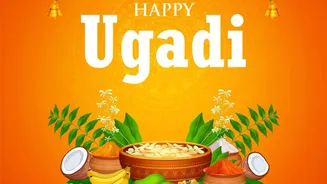
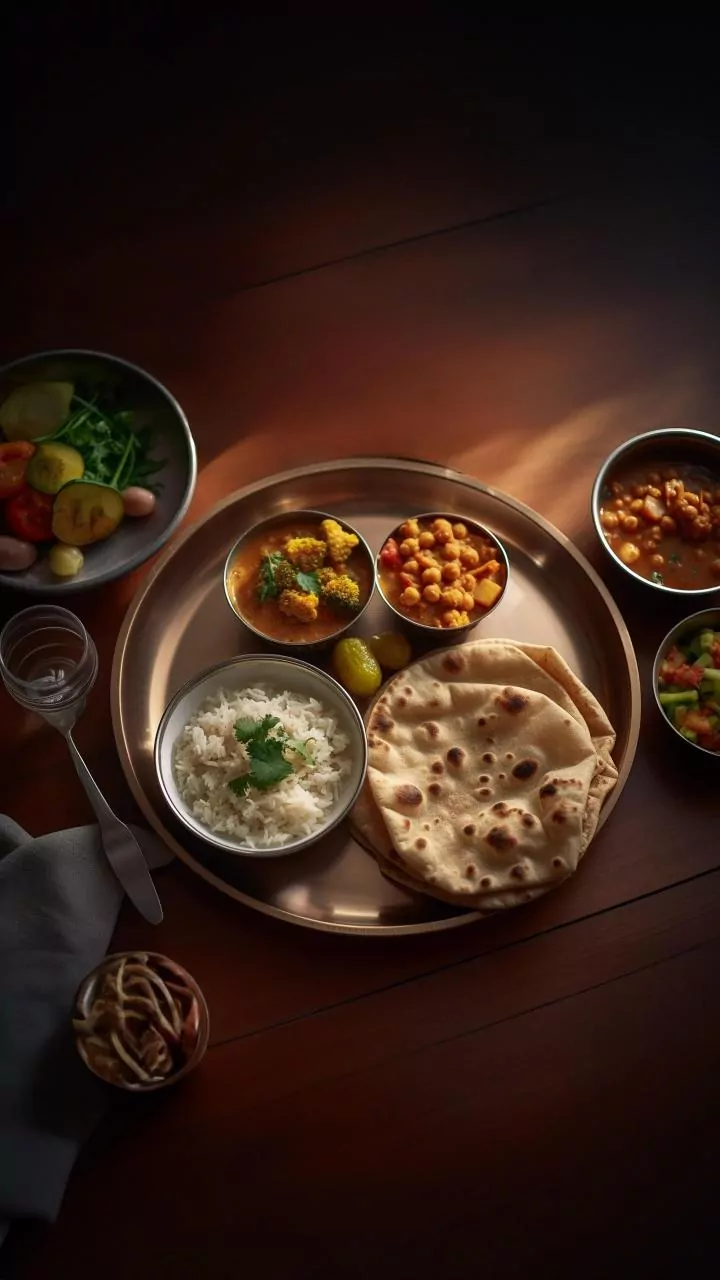
The celebration of Ugadi and Gudi Padwa is a vibrant display of cultural traditions, filled with elaborate rituals and joyous festivities. Homes are meticulously cleaned and adorned with colorful 'Kolamulus' or 'Rangoli' patterns on the floor, and doorways are decorated with 'Toranalu' made from fresh mango leaves, symbolizing good fortune and auspiciousness. A significant pre-festival ritual involves a ceremonial bath, often followed by an oil treatment, cleansing individuals both physically and spiritually for the new year. People are encouraged to wear new clothes, signifying a fresh start and embracing the year with renewed vigor. Temples are visited for prayers and blessings, and acts of charity and helping the needy are considered especially meritorious on this day. A culinary cornerstone of the celebration is the 'Ugadi Pachadi' or 'Chutney,' a unique dish that masterfully blends six distinct flavors: sweet, sour, bitter, pungent, salty, and tangy. This complex taste profile is a profound metaphor for life's varied experiences, reminding celebrants that the upcoming year will inevitably bring a spectrum of joys, sorrows, and challenges. Key ingredients like jaggery (sweet), neem flowers (bitter), salt, tamarind, and raw mango (sour/tangy) come together to create this symbolic dish. Gudi Padwa in Maharashtra features the erection of a 'Gudi,' a flag adorned with flowers, neem and mango leaves, and sugar crystals, topped with an inverted copper or silver vessel, symbolizing victory and prosperity. This Gudi is prominently displayed, often from a window or balcony, facing east. Traditional feasts are a highlight, with families and friends gathering to share special dishes like Pulihora, Bobbatlu, Puran Poli, and Shrikhand, further enhancing the communal spirit of the celebrations.
Astrological and Historical Context
The observance of Ugadi and Gudi Padwa is deeply rooted in ancient astrological calculations and historical narratives, providing a rich context for the festival. The festival's timing is determined by the Luni-Solar calendar, which precisely tracks the movements of both the Sun and the Moon, offering a more nuanced approach to timekeeping than purely solar or lunar calendars. This calendar system underpins the calculation of 'Samvatsaras,' cyclical periods of approximately one year, with a grand cycle of sixty Samvatsaras completed when Jupiter makes five full revolutions of the zodiac. The specific Samvatsara for 2026 is designated as 'Krodhi Nama Samvatsara,' according to calculations attributed to the renowned mathematician Bhaskaracharya in the 12th century. The astrological relevance is further amplified by the transit of Jupiter through zodiac signs, believed to influence earthly affairs. From a mythological perspective, Ugadi is linked to pivotal events in Hindu cosmology. One prominent legend recounts Lord Brahma's creation of the universe on this day, following Lord Vishnu's retrieval of the Vedas from the demon Somakasura. Another narrative connects it to the auspicious coronation of Lord Rama in Ayodhya after his triumph over Ravana, marking it as a historically significant day for new beginnings and righteous rule. Furthermore, Ugadi is believed to signify the onset of the Kali Yuga, the current cosmic age, a period that began with Lord Krishna's departure from the mortal world. Interestingly, Ugadi is one of the rare occasions in Vedic tradition where Lord Brahma is specifically venerated for his role in the cosmic creation and sustenance of the world. The festival also marks the beginning of the nine-day Vasanta Navratri, culminating in Ram Navami, highlighting its integral connection to other significant Hindu observances.
Regional Variations and Dates
While Ugadi and Gudi Padwa share a common essence of New Year celebration, their observance exhibits distinct regional variations across India, reflecting the diverse cultural tapestry of the nation. In Karnataka and Andhra Pradesh, it is predominantly known as Ugadi, while in Maharashtra, the celebration takes the form of Gudi Padwa. The foundational principle for determining the date remains consistent: it falls on the first day following the New Moon after the Spring Equinox. For the year 2026, this auspicious occasion is set to be observed on Thursday, March 19th, with the Spring Equinox occurring on Friday, March 20th. This slight calendar nuance, where the festival might precede the equinox in some instances, underscores the precision of the lunisolar calculations. Ugadi is a recognized public holiday in Andhra Pradesh, Tamil Nadu, and Telangana, underscoring its importance in these states. Beyond these primary regions, the spirit of the New Year is echoed in other parts of India under different names and customs. For instance, the Sindhi community celebrates this day as 'Cheti Chand,' marking their new year. In Kerala, the Malayali community observes 'Chaitra Vishu,' and in Punjab, the harvest festival and Sikh New Year are celebrated as 'Vaisakhi.' These regional distinctions, while varying in specific rituals and nomenclature, all converge on the universal theme of renewal, hope, and the embrace of a fresh cycle of life, demonstrating the widespread cultural significance of the Hindu New Year across the subcontinent.