


Lentil Preparation Fundamentals
Begin by meticulously preparing the whole black gram, commonly known as urad dal. A crucial first step involves thorough washing to remove any impurities,
followed by soaking. The chef recommends rubbing the dal with salt during the washing process to ensure even flavor distribution. After rinsing, the dal should be submerged in ample water and left to soak overnight. This soaking period is essential for softening the lentils, which dramatically reduces their cooking time and ensures they become tender and creamy when eventually prepared. The quantity of dal specified, 500 grams, is designed to serve approximately two to four individuals, making it a manageable portion for a family meal.
Initial Dal Cooking
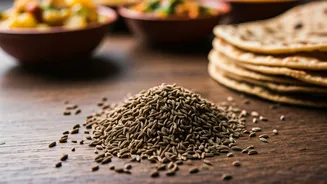
Once the urad dal has undergone its overnight soak, the cooking phase begins, aiming for tender results in a pressure cooker. Start by heating 1-2 tablespoons of ghee in the cooker. Once shimmering, introduce aromatics: a green chili for a subtle heat, cumin seeds to release their earthy fragrance, and finely chopped tender coriander stems for a fresh, herbaceous note. Sauté these briefly for about a minute until fragrant. Then, add the soaked and drained urad dal to the pot. Incorporate degi red chili powder for color and mild heat, turmeric powder for its vibrant hue and earthy undertones, and salt to taste. Pour in 4-5 cups of water, ensuring the dal is well-covered. Secure the lid and cook for 4-5 whistles, or until the dal reaches a perfectly tender consistency. Allow the pressure to naturally release before proceeding.
Crafting the Makhani Base
The heart of Dal Makhani lies in its rich, flavorful base, which is built in a handi. Begin by melting 2-3 tablespoons of ghee over medium heat. Add finely chopped garlic cloves and sauté for a minute until their pungent aroma intensifies. Next, introduce finely chopped ginger and a large, finely chopped onion. Season with salt to taste and cook until the onions turn a light golden hue, signifying they are softening and caramelizing. Add finely chopped green chilies for a controlled spice level and a large, finely chopped tomato. Cook this mixture for another 4-5 minutes, allowing the tomatoes to break down and become mushy, forming a thick paste. To this, add degi red chili powder, coriander powder, and cumin powder, followed by 2-3 medium tomatoes that have been pureed. Stir in another teaspoon of ghee and cook this masala until the oil begins to separate from the mixture, indicating that the spices have been well-toasted and are releasing their full flavor.
Simmering and Finishing Touches
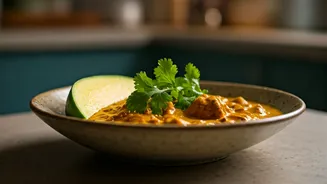
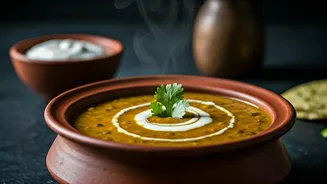
With the masala base ready, it's time to bring everything together for the signature slow simmer. To the prepared masala in the handi, add salt to taste and 2-3 cups of water, adjusting the consistency to your preference. Introduce the cooked urad dal, ensuring it's well-mixed into the sauce. Allow the dal to simmer gently on low to medium heat for at least 15-20 minutes. This crucial simmering period allows the flavors to meld beautifully and the dal to achieve its characteristic creamy texture. Towards the end of the simmering process, stir in 2 tablespoons of cubed butter and the pre-prepared tadka, giving the dal a final quick boil to integrate these elements. The dish is then ready to be transferred to a serving dish and garnished with a dollop of fresh cream, a cube of butter, and a sprig of fresh coriander before serving hot with your favorite accompaniments like naan or steamed rice.
Aromatic Tadka Preparation
The tadka, a flavorful tempering, is a critical component that elevates the Dal Makhani to its full potential. In a separate pan, melt 3-4 tablespoons of butter. Once the butter is melted and slightly warm, add 1 tablespoon of crushed dry fenugreek leaves (kasuri methi). Be careful not to burn the fenugreek, as it can turn bitter. Immediately follow with 1 heaped teaspoon of degi red chili powder, which imparts a beautiful deep red color and a mild warmth. Stir in 2-3 tablespoons of finely chopped fresh coriander leaves. Cook this mixture for just about a minute, until it becomes intensely aromatic and the spices have bloomed in the butter. This vibrant tadka is then turned off the flame and set aside to be added to the simmering dal just before serving, infusing it with an extra layer of depth and fragrance.