




Beyond Fearful Portrayals
World Tarot Day, observed annually on May 25th, aims to highlight tarot as a potent instrument for self-discovery, emotional insight, and personal development.
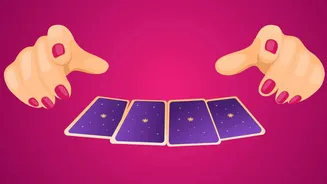
Despite its rising popularity, tarot frequently suffers from widespread misunderstanding. Many people dismiss it as mere amusement, while others harbor apprehension due to sensationalized social media readings that often focus on dramatic outcomes like heartbreak or chaos. However, tarot was never intended to operate from a place of fear. Fundamentally, it functions as a rich symbolic language, reflecting emotional landscapes, underlying thoughts, internal conflicts, potential paths, and the journey of personal evolution, rather than dictating specific dramatic future events. The cards are not designed to instill dread; rather, they serve as catalysts for enhanced self-comprehension and a clearer grasp of one's circumstances. The ancient wisdom embedded within tarot resonates with principles found in Indian knowledge systems, such as Shakun Shastra, which similarly interprets meaning through signs and omens, illustrating a universal human inclination to find significance in patterns and events.
Death: Transformation, Not Doom
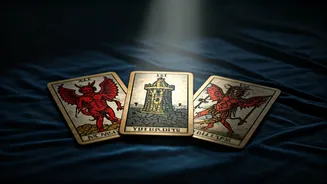
The Death card frequently instills panic, primarily because it's wrongly associated with literal physical demise. In reality, its essence lies in signifying profound transitions, significant endings, and necessary emotional releases. This card often appears when established relationship dynamics shift, a career phase concludes, an outdated sense of self begins to fade, or a long-held belief system no longer aligns with your life's direction. The apprehension linked to this card typically mirrors the emotional difficulty inherent in letting go. More often than not, the Death card serves as a potent reminder that certain conclusions are essential for the emergence of healthier, more constructive beginnings. It signifies an inevitable cycle of change and renewal, encouraging acceptance of the ending to embrace the potential for new growth and evolution.
The Tower: Unveiling Truth
The Tower card's imposing imagery often leads people to label it as one of the most negative cards in a tarot spread, symbolizing sudden disruption, instability, and emotional upheaval. However, its underlying message is frequently more beneficial than alarming. The Tower typically surfaces when a situation built on a fragile foundation has been masquerading as stable for an extended period. This might manifest as an unstable relationship, a false sense of certainty, prolonged emotional denial, or a scenario that has become unsustainable. While the disruption can be genuinely unsettling, the card itself doesn't advocate for destruction devoid of purpose. Instead, it represents the inevitable breakthrough of truth, dismantling illusions and exposing false realities. Sometimes, life intervenes to remove what can no longer be honestly sustained, paving the way for authenticity.
Devil: Inner Attachments
The Devil card is commonly misunderstood due to its association with malevolence, dark energies, or spiritual attacks. In truth, its significance is predominantly psychological and deeply human. This card frequently points to unhealthy dependencies, consuming obsessions, debilitating addictions, recurring toxic cycles, emotional entrapment, or an excessive fixation on material possessions. It acts as a direct invitation to conduct an honest self-assessment, revealing what elements might be exerting undue influence over your decisions. The fear surrounding this card often stems from the uncomfortable recognition of detrimental patterns within oneself, rather than from any external malevolent force. It's a call to confront and break free from limiting attachments and self-imposed prisons.
Hanged Man: Patient Pause
Another card that often elicits negative reactions is The Hanged Man, which appears to signify stillness, delays, and a lack of discernible progress. In our contemporary culture that prizes constant forward momentum, periods of pause can feel exceptionally frustrating and uncomfortable. Yet, this card rarely indicates failure. Instead, it strongly suggests a need for shifting perspectives, exercising patience, and embracing a conscious period of contemplation. Often, life deliberately slows down because rushing ahead might precipitate greater difficulties. The Hanged Man serves as a gentle reminder that not every delay is inherently negative. Some pauses are essential, providing the necessary time and clarity to fully assess a situation before committing to the next course of action.
Moon: Navigating Confusion
While the Moon card can sometimes represent hidden threats, deception, or unseen adversaries, its more prevalent interpretation relates to internal states. It often signifies emotional ambiguity, pervasive uncertainty, heightened anxiety, the tendency towards projection, subconscious fears, and an incomplete grasp of reality. This is the archetype of a situation where assumptions feel more potent than objective facts. You might find it challenging to perceive circumstances clearly because your emotional responses are clouding your judgment. In many instances, the source of this confusion is internal rather than external. The Moon card encourages a deliberate emotional slowdown, urging you to refrain from making hasty conclusions until a clearer understanding fully emerges.
Fool: Embracing New Beginnings
The very name of The Fool card often leads to immediate misinterpretations, causing it to be wrongly associated with foolishness, recklessness, or poor decision-making. In contrast, it fundamentally embodies new beginnings, an open disposition, unwavering trust, boundless potential, and the courage required to step into the unknown. You might encounter the energy of The Fool when embarking on a new relationship, initiating a career change, relocating to an unfamiliar city, launching a business venture, or starting anew after navigating a challenging period. The common misunderstanding arises when openness is mistaken for carelessness. In reality, this card signifies profound bravery and the willingness to embrace emotional risks, even in the absence of absolute certainty, championing the spirit of adventurous exploration.