




Dangerous Structures Identified
The Brihanmumbai Municipal Corporation (BMC) has identified 174 buildings as being in a 'C1 dangerous category,' signaling a significant structural risk
to residents. Of these, 72 have already been vacated to ensure public safety. However, the process of vacating and subsequently demolishing or securing these structures involves complex challenges. Some buildings, though vacated, have not yet been demolished. A further complication arises from 71 buildings that currently have stay orders, necessitating legal intervention from the BMC to proceed. The civic body is actively engaged in sensitizing occupants who are reluctant to vacate their premises or provide undertakings, underscoring the urgency to mitigate potential hazards before the monsoon season intensifies.
Landslide Risk Mitigation
A thorough assessment has pinpointed 249 locations across Mumbai as being prone to landslides, categorized into sensitive and ultra-sensitive zones. To counter these risks, construction of retaining walls is currently in progress at 96 designated sites. Furthermore, Assistant Commissioners and the Maharashtra Housing and Area Development Authority (MHADA) have been tasked with conducting reinspections of all existing protective walls. This crucial step aims to verify if these walls have surpassed their structural lifespan or if their effectiveness has diminished due to blocked drainage outlets, ensuring their continued efficacy in preventing landslides.
Flood Spot Management
In response to potential waterlogging, the BMC has addressed 403 out of 496 identified flooding spots across the city. For the remaining 93 locations, there is a possibility of water accumulation during periods of very heavy rainfall. To manage these areas, specific pumping arrangements have been put in place where natural drainage systems might be insufficient. This proactive measure is designed to alleviate waterlogging issues and ensure smoother traffic and pedestrian flow even under intense precipitation.
Advanced Dewatering Systems
To combat waterlogging effectively, a total of 547 dewatering pumps are being installed and will be operational from May 5th. A significant technological upgrade this year involves equipping all these pumps with IoT-based devices. This innovative system will enable real-time monitoring of pump performance and uptime through smartphones, allowing for immediate identification of any malfunctioning units. A central control room at the BMC headquarters will oversee their operation, ensuring maximum efficiency and rapid response to any issues, thereby enhancing the city's resilience against heavy rainfall.
Drainage and River Cleaning
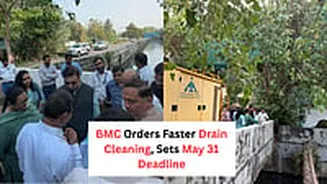
The critical task of desilting drainage systems is progressing, with the city and western suburbs showing approximately 45% completion as of April 28th. However, the eastern suburbs are lagging behind at 26%. Major nallah cleaning has reached 38.97%, with intensified efforts planned for the eastern suburbs. Cleaning of the Mithi River has seen about 27% work completed so far. For minor nallahs, the average completion rate stands at 45.64%, though work is slower in specific areas like M East ward (Govandi) and S ward (Bhandup), where the BMC intends to ramp up operations.
Tree Trimming and Disaster Readiness
As part of its monsoon preparedness, 59,720 trees have been marked for trimming to prevent them from falling during high winds. Additionally, the readiness of the National Disaster Response Force (NDRF) and fire brigade lifeguards has been thoroughly reviewed. This ensures that emergency response teams are well-equipped and prepared to handle any untoward incidents that may arise due to extreme weather conditions, complementing the infrastructure-focused mitigation efforts.
Road Infrastructure Improvements
Significant strides are being made in road infrastructure to address the perennial issue of potholes. Through an extensive cement concrete road program, approximately 1,745 km of Mumbai's 2,050 km road network has already been concretized. Further stretches are slated for completion before the monsoon, and any unfinished sections will be made motorable to ensure smooth passage. This initiative has drastically reduced pothole-related expenditure, from ₹230 crore in 2023 to ₹164 crore in 2024, and projected savings from ₹97 crore in 2025 to ₹45 crore in 2026. A 'pothole fix-it' app is also being launched for rapid issue resolution.