
Network Expansion Vision
The ambitious plan to introduce seven new bullet train corridors signals a massive push by the Indian government to modernize and upgrade its railway infrastructure.
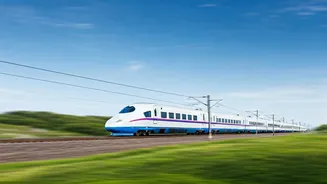
This initiative aims at establishing a high-speed rail network across the nation, making it easier and faster to traverse the country. The corridors will connect prominent cities, boosting trade, commerce, and tourism while reducing travel times significantly. This effort aligns with the goal of fostering economic growth and providing better connectivity. These high-speed rail routes are designed not just for passenger transport but also for promoting integrated development by connecting major economic hubs across the country. Through strategic planning and execution, India seeks to establish itself as a leader in advanced railway technology and infrastructure.
Corridor Routes Unveiled
The seven new bullet train corridors are strategically designed to link various key locations across India. One planned route includes the Delhi-Varanasi corridor, facilitating quicker connections between the capital and the holy city of Varanasi. Another is the Mumbai-Hyderabad corridor, which aims to enhance connectivity between two important metropolitan areas. Furthermore, the Chennai-Bengaluru-Mysore corridor is on the cards to boost regional connectivity in the South. The Delhi-Amritsar, Mumbai-Nagpur, and other routes are also being considered. These routes are meticulously planned to align with significant economic and population centers. This strategic approach will enhance overall efficiency and stimulate economic activities along the way. The aim is to create a seamless high-speed network that supports both passenger transport and freight movement, thereby promoting comprehensive growth.
Economic Impact Anticipated
The implementation of the bullet train corridors is expected to generate major economic benefits across various sectors. The high-speed rail network will reduce travel times, which will lead to a considerable increase in productivity. This will be achieved by facilitating faster movement of goods and people. Moreover, the project will attract significant investment in related industries, creating numerous job opportunities in construction, manufacturing, and services. The improved connectivity will also boost tourism by making it easier to visit different destinations, thereby stimulating local economies. Consequently, the expansion will foster trade and business interactions, contributing significantly to India's overall economic expansion. The infrastructure development will also catalyze urbanization and promote balanced regional development across the country.
Technological Advancements
The construction of the bullet train corridors will introduce several advanced technologies into the Indian railway system. The project will involve using the latest signaling systems, high-speed rail tracks, and modern rolling stock to ensure efficiency and safety. Indigenous design and manufacturing capabilities will be boosted through the project, making it technologically self-reliant. Moreover, the project will require the adaptation of advanced safety features to guarantee secure operations at high speeds. This includes incorporating sophisticated monitoring systems and emergency response mechanisms. The initiative seeks to promote the transfer of technology and expertise, enabling India to develop its own capacity for advanced rail infrastructure. This technological upgrade will improve the country's position as a player in the international railway sector.
Challenges and Mitigation
The ambitious project faces several challenges, including land acquisition, environmental clearances, and funding requirements. Acquiring land for the vast network can be complex, requiring thorough planning and stakeholder coordination. Securing environmental clearances to ensure minimal ecological impact is also vital. In addition, the project needs large-scale funding, which may involve a combination of government investment and private partnerships. However, the government is committed to mitigating these challenges by streamlining processes, setting clear guidelines, and supporting collaborative initiatives. Furthermore, efforts will be made to adopt sustainable practices, thus ensuring that construction and operation of the high-speed rail network are environmentally friendly. The government is also putting measures to secure timely completion and efficient project management.
Future of Rail Travel
The introduction of bullet train corridors signals a transformative shift in the future of rail travel within India. The advanced infrastructure will greatly enhance the efficiency and speed of passenger transit, promising a more comfortable and faster journey. Furthermore, the integration of high-speed rail with existing networks will improve overall transport connectivity, creating a more integrated system. This development will attract more travelers to opt for rail, promoting sustainable and eco-friendly travel options. The success of this initiative has the potential to reshape the country's transport landscape, fostering economic growth and urban development. It will also establish a new standard for railway infrastructure, thereby positioning India as a global leader in high-speed rail technology and infrastructure.